“Don’t Go to Your Husband’s Funeral. You Should Check Your Sister’s House Instead.” She received…
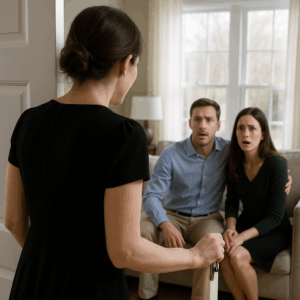
That morning, the day of Patrick’s funeral, I got a letter. No name.
No return address. Just a plain white envelope in the mailbox. Inside, a few words typed in block letters, Don’t go to your husband’s funeral.
You should check your sister’s house. She’s not alone. I stood on the front porch in a black dress I’d bought three days ago, reading those lines over and over.
My hands were shaking. Not from the cold, something else. That feeling when you know your whole world is about to flip upside down, but you still don’t know how.
My first thought was simple, someone’s idea of a sick joke. A cruel prank on the worst day of my life. Someone thought it’d be funny to pile pain on top of pain.
I almost threw the letter straight in the trash. Almost. But something stopped me.
The words were too specific, she’s not alone. Not, check on your sister, or, something’s up with Brenda. No, it was, she’s not alone.
As if the writer knew exactly what was going on. As if they’d seen it. I checked the time.
Two hours until the funeral. The car was already waiting outside, a black one, with a driver in a dark suit. Everything was set.
The casket, the flowers, the reception. Patrick’s relatives were already gathering at the morgue. His mother had called half an hour ago, asking why I hadn’t arrived yet.
And I was just standing there, holding that damn letter, frozen in place. Brenda lived five minutes away. A tiny house she’d rented after the divorce.
We weren’t that close, 13 years between us, different interests, different lives. But when she split from her husband two years ago, I gave her a spare key. Just in case.
You never know. That key had been sitting in my purse ever since. I’d nearly forgotten it was there.
I shoved the letter in my pocket and headed for Brenda’s house. Walked fast, almost ran. My heels clicked against the pavement.
One thought kept looping in my mind, this is nonsense, this is insane, I’m going to miss my husband’s funeral because of someone’s stupid prank. But my legs kept going. Brenda’s place looked normal.
White curtains on the windows, a little garden out front. Nothing seemed off. I stopped at the gate and listened.
Silence. Maybe she was still asleep. She always stayed up late, slept in even later.
I pulled out the key. My hand trembled as I slid it into the lock. The door opened smoothly, without a creak.
The hallway smelled like coffee, and something else. Men’s cologne. I froze.
Brenda hadn’t dated anyone in over a year. She told me herself she was done with men, that she just wanted to focus on herself. I slipped off my shoes and tiptoed down the hallway.
I could hear sounds coming from the kitchen, someone moving dishes, running water, opening cabinets. Two people. I could hear two voices, one male, one female.
My heart was pounding so loud I was sure the whole house could hear it. I crept up to the kitchen door and peeked inside. What I saw didn’t make sense.
A man was sitting at the table with his back to me. Dark hair, broad shoulders, a familiar mole on his neck. He was in a t-shirt and sweatpants, just lounging at home.
Brenda was by the stove, cooking something. She wore a robe, barefoot, her hair a mess. They looked like a couple who’d lived together for years.
Then the man turned his head, and I saw his face. It was Patrick. My husband.
The man who was supposed to be in a coffin. The man I was meant to bury in two hours. He was alive.
He was sitting in my sister’s kitchen, drinking coffee like nothing had ever happened. I don’t remember how I was breathing in that moment. I don’t even know if I was thinking at all.
My head was just noise, white static, like on a broken TV screen. Brenda walked up behind him and placed her hands on his shoulders. He covered her hand with his, gently, like it was second nature.
Like something two people do when they’ve been together a long time. I saw him turn and kiss her hand. I saw her lean down and kiss the top of his head.
I saw their smiles, their comfort, their closeness. They were happy. At the very moment I was supposed to be burying my husband, he was sitting in my sister’s kitchen, happy.
I stepped back from the door. Slowly. Carefully…
My legs wouldn’t obey me, my knees felt like jelly. I made it to the hallway, put on my shoes, walked outside, and closed the door behind me. I stood at the gate, frozen, with no idea what to do next.
The world had collapsed, just like that, in five minutes. Everything I believed in, everything I thought I knew about my life, turned out to be a lie. Patrick was alive.
Patrick was with Brenda. Patrick had betrayed me. But the worst part wasn’t even that.
The worst part was not knowing how long it had been going on. A week? A month? A year? Had they been together this whole time, while I was mourning, planning his funeral, picking out a casket, ordering the memorial lunch? Had they been laughing at me? I walked home. Slowly, like I was dreaming.
People on the street gave me strange looks, maybe I looked insane. A woman in a black dress, walking with no purpose, staring into nothing. The driver was waiting for me outside the house.
He was smoking near the car, glancing nervously at his watch. Meredith, we should go, he said when he saw me. We’re already late.
I looked at him and couldn’t get a single word out. How do you explain that you can’t go to your husband’s funeral because he’s alive? How do you say that this is all some sick performance and I’m just the fool playing the lead? Meredith, are you alright? He stepped closer. Do you feel sick? Should I call a doctor? I shook my head and went inside.
Locked the door. Leaned against it, and finally broke down crying. Not from grief.
From rage. From humiliation. From being played for a fool.
From not knowing what the hell to do next. The phone wouldn’t stop ringing. Patrick’s mother.
His brother. Friends. Everyone asking where I was, why I wasn’t there, what had happened.
I didn’t answer. I just sat there on the hallway floor, listening to the phone ring. After an hour, the calls stopped.
Maybe they thought I’d collapsed. Maybe they thought I was in the hospital or something. Maybe the funeral went on without me.
A funeral for an empty coffin. I got up and went to the bedroom. Our bedroom.
Mine and Patrick’s. His clothes were still there. Our photos still hung on the walls.
It all looked like the set of a stage play. I sat on the bed and tried to make sense of the last few weeks. Patrick’s illness.
His death. The funeral preparations. Was any of it real? Or just an act? Patrick got sick a month ago.
At first, he said he was just tired. Then came chest pains. I made him see a doctor.
The doctor said it was stress, gave him meds, told him to rest. But Patrick kept getting worse. Then came the ambulance, the hospital, the ICU.
The doctor said it was heart failure, said it was serious. I spent days and nights in that hospital. Patrick was hooked up to IVs, pale, weak.
We barely spoke, he was always asleep or pretending to be. Three days ago, I got a call from the hospital. They said Patrick had died in his sleep that night.
His heart gave out. I remember collapsing to the floor when I heard the news. I remember screaming, refusing to believe it was real.
I remember going to the hospital and seeing his body under a white sheet. But now I realized that could have been part of the act too. Bribed doctors, fake paperwork, someone else’s body in the morgue.
Anything’s possible if you have the money and the right connections. And Patrick had both. He worked for a construction firm, handled big contracts.
He had friends in city offices, hospitals, even the police. If he wanted to disappear, he had the means to pull it off. But why? I got up and walked to the window.
Outside, life went on like nothing had happened. People ran errands, kids played in the yard, dogs chased each other between the trees. No one knew my world had just fallen apart.
The phone rang again. Brenda’s name lit up on the screen. I stared at it for a long time, unsure if I should pick up.
What was she going to say? Pretend to grieve? Ask why I didn’t show up to the funeral? I answered. Brenda sounded anxious, almost frantic. She said she’d been trying to reach me everywhere, that everyone was worried, that the funeral happened without me and people thought something had happened to me.
She said she was on her way to my place and that we needed to talk. I listened to her voice and tried to figure out, did she know I’d seen them together? Or did she think her little secret was still safe? She arrived 30 minutes later. I opened the door and saw her red eyes, messy hair, the black dress.
She looked like someone who just buried a loved one. She hugged me and started crying. Said she understood my grief, that she was barely holding it together too, that Patrick had been like a big brother to her.
She said we needed to support each other through this difficult time. I stood in her arms, feeling the anger grow inside me. How could she act like this? How could she look me in the eye and lie? But I didn’t say a word.
I just nodded and listened, because I had no idea what to do with what I knew. I didn’t know how to use it, yet. Brenda stayed the whole evening.
We sat in the kitchen drinking tea while she talked about the funeral. How beautiful it all was. How many people came to say goodbye.
How everyone asked about me. She said Patrick’s mother was very upset I wasn’t there, that his brother was furious and said it was disrespectful to the memory of the dead. That their friends were confused and worried.
Meredith, you have to explain it to them, Brenda said. Call them. Apologize.
Tell them you were sick, that you were in shock. They’ll understand. I nodded, thinking about how perfectly she played her role.
The caring sister, concerned about the grieving widow’s reputation. No one would ever suspect that while the funeral was happening, she was sleeping peacefully. After Brenda left, I locked the door and sat down to make a list.
A list of everything I needed to figure out. A list of questions that needed answers. How long have Patrick and Brenda been together? Who else knows Patrick is alive? How did they fake his death? Why did they do it? What are they planning next? And the biggest question of all, what am I supposed to do with this knowledge? I could go to the police and tell them everything.
But who would believe me? They’d say I’d gone mad from grief, that I was imagining things. And if Patrick really did bribe the doctors, then he has an official death certificate. He has paperwork.
Witnesses. I could go back to Brenda’s house and cause a scene. Confront them when they’re together, demand answers.
But what would that change? They’d just say I was crazy. Or I could pretend I didn’t know a thing. Keep playing the grieving widow.
Quietly gather evidence. Find out the whole truth, and then strike so hard they’d have no way to cover it up. That last option felt like the only sane one.
I hid the letter in my jewelry box and got into bed. But I couldn’t sleep. I just lay there in the dark, thinking about how tomorrow would be the start of a new life.
A life where I’d pretend I didn’t know the truth. A life where I’d be planning revenge. In the morning, Patrick’s mother called.
Her voice was cold, distant, offended. She said she couldn’t understand how I could miss my own husband’s funeral. That it was a disgrace to the family.
That people were talking. I apologized. Told her I’d gotten sick, passed out, and only came to in the evening.
Said I’d never forgive myself for missing it. Her tone softened a bit. She said she understood my grief but wished I’d at least told someone, I had everyone worried.
We agreed to meet the next day. She wanted to give me Patrick’s things from the hospital and talk about the inheritance. After that, Patrick’s brother called.
Then friends. They all said the same thing, they understood I was grieving, but they were concerned. Said my behavior was strange.
They all wanted answers. And I gave them answers. Apologies.
I played the role of a woman on the brink, shattered by her husband’s death. And with every conversation, it became clearer, Patrick was dead to everyone but me. For the rest of the world, he was gone and buried.
Which meant the plan had been executed down to the smallest detail. That afternoon, I went to the cemetery. I needed to see the grave they’d dug for the empty coffin.
It was fresh. The dirt hadn’t settled yet. Wreaths and flowers lay on the mound.
A temporary plaque read, Patrick Whittaker. 1978-2023. Loving husband and son.
I stood there, staring at that fake grave, thinking about the empty box, or someone else’s body, buried underneath. And about my husband drinking coffee in my sister’s kitchen. A few feet away, an elderly woman with flowers was standing quietly.
She looked at me and shook her head. You must be the wife, she said. You weren’t at the funeral yesterday.
People noticed. I nodded. I get it, she said.
It’s hard, losing a husband so young. I lost mine early too. But you should’ve come.
For the people. For the memory. She laid the flowers on a neighboring grave and walked away.
I stayed there, alone. Staring at the fake grave of my very much alive husband, trying to make sense of what I was feeling. Anger.
Pain. Relief. Maybe all of it at once.
That evening, I sat at home thinking about tomorrow. I’d have to meet Patrick’s mother, take his things from the hospital, talk about the inheritance. Pretend I was still deep in mourning.
Keep playing the part of the widow. Meanwhile, Patrick would be starting his new life with Brenda. Free.
Happy. Rid of the wife he’d clearly grown tired of. But what he didn’t know was that I knew the truth, and that was the one advantage I had.
I woke up the next morning on the hallway floor. My neck ached, my back throbbed, and my head pounded like a drum. For the first few seconds, I didn’t know where I was or what had happened.
Then it all came rushing back, the letter, Brenda’s house, Patrick at the kitchen table. Alive. I got up, smoothed out the black dress I’d never taken off, and checked the time.
6.30 in the morning. In three hours, I was supposed to be at Patrick’s mother’s house, picking up his things from the hospital and talking about the inheritance. I went to the bathroom and caught a glimpse of myself in the mirror, and flinched.
Red eyes, smudged mascara, hair like I’d been through a storm. That’s what a woman who’s just lost her husband is supposed to look like. The perfect look for what I was about to do.
Because I’d made a decision. I don’t know exactly when it happened, maybe during the night, lying on the floor, thinking about what came next. Maybe that morning, when I saw my reflection.
But I knew one thing for sure, I wasn’t going to run to Patrick and Brenda, screaming and throwing accusations. I was going to play the grieving widow. I was going to gather information.
Find out why they’d staged this whole thing. And then I’d strike, hard enough that they’d never recover. I showered and did my makeup, but only lightly, I needed to look pale, worn out.
I put on another black dress, something more formal. Grabbed my purse, the one with the letter inside, and headed to Patrick’s mother’s house. Margaret lived in an old house downtown.
The same house where Patrick grew up, spent his childhood and teenage years. I’d been there many times before, but today, everything felt different. Every photo on the wall, every object in that house reminded me of the man who had betrayed me so cruelly.
Margaret met me at the door. She was dressed in black, her hair neatly done, her face tight with grief. But when she saw me, her expression softened.
She hugged me and said she understood my pain. That she herself could barely keep it together after losing her son. That we needed to support each other through this.
I let myself cry. I didn’t even have to fake it, tears came on their own. But I wasn’t crying for Patrick’s death.
I was crying for the life I’d just lost. We sat in the living room, and Margaret started telling me about the funeral. Then she brought out a box of Patrick’s things from the hospital.
His watch, his wedding ring, wallet, and phone. I picked up the phone and turned it on. The last messages were from me, I’d texted him the day he’d died, asking how he was feeling.
He never replied. Now I knew why. Margaret pulled out a folder with documents, his will, insurance papers, bank accounts…
She explained what would need to be processed, which forms to fill out, which lawyers to contact. I nodded and listened, all while thinking that every piece of paper in that folder was part of the performance. Somewhere, there had to be real documents.
The ones that showed where the money was actually going. Then Patrick’s brother, Stephen, arrived. He was five years older than Patrick and worked in city administration.
A serious man with graying temples and a firm stare. He hugged me and said he’d been really worried yesterday. That he almost came to check on me himself, but Margaret stopped him.
He sat down next to me and started talking about how much he’d miss his brother. About how Patrick was the best person he’d ever known. That people like him shouldn’t die so young.
I listened to his words and felt the anger boiling up inside me. Then Stephen pulled out another folder, this one about the inheritance. He explained that the house and car were being transferred to me.
That there was a bank deposit and life insurance, all set up properly. No issues. But when he opened the insurance policy, my heart stopped.
There were two names listed as beneficiaries. Mine, at 70 percent. And Brenda’s, at 30.
I stared at that line, frozen, unable to believe what I was seeing. When did Patrick add Brenda to the policy? And why? Stephen noticed my reaction and explained that Patrick had changed the policy two months ago. Said he just wanted to help Brenda, she’d recently gone through a divorce, was living alone, struggling with money.
Two months ago. That meant they were planning this even back then. I asked, isn’t it a little strange to add your wife’s sister to your life insurance? Stephen shrugged and said Patrick had always been kind.
That he saw Brenda like a little sister and just wanted to take care of her. Margaret agreed. Said Patrick often talked about Brenda, worried about her after the divorce, wanted to help her get back on her feet.
I nodded and smiled, but inside, I was boiling. So it wasn’t just some secret affair. They were planning my future.
Deciding how much money I’d get, and how much they’d take for themselves. We stayed at Margaret’s until lunch. She told stories from Patrick’s childhood, showed me old photos, cried over his school notebooks.
Stephen talked about his brother’s job, his dreams, how he wanted to buy a house in the countryside and raise rabbits. It was all very touching. If I hadn’t known the truth.
But I did. I knew that the man they spoke of with such love was, at that very moment, sitting in my sister’s house planning how to spend the insurance payout. As I was leaving, Margaret handed me another box.
It had Patrick’s personal things, books, CDs, some papers. She said she couldn’t bear to look through them herself. Thought it might be easier for me.
I took the box and drove home. On the way, I stopped at the store and bought groceries. I needed to keep up appearances.
Needed things to look normal. At the store, I ran into our neighbor Linda. An older woman who knew everything and everyone in the neighborhood.
She offered her condolences, said she was devastated to hear about Patrick’s passing. Then she leaned in and whispered, is it true you didn’t go to the funeral? I told her I’d gotten sick, passed out, and only came to later that evening. Linda nodded like she understood, but I saw the doubt in her eyes.
Back home, I set the box on the table and started sorting through it. Books Patrick had been reading recently. Music CDs, old photos.
Nothing unusual. But at the very bottom, I found a notebook. Just a regular checkered notebook, half full.
I opened it and saw Patrick’s handwriting. Most of it was mundane, appointments, phone numbers, shopping lists. But toward the end, it changed.
Dates. Amounts of money. Names I didn’t recognize.
And at the very end, a plan. A detailed plan for faking his death. I read those pages and couldn’t believe what I was seeing.
Patrick had thought through everything. Which doctor to bribe. What documents to forge.
How to stage the funeral. Even how to act around me in the final days. One note said he needed to start pulling away from his wife, talk less, show less affection, so it’d be easier to disappear when the time came.
Another said Brenda was getting nervous and needed reassurance. He had to calm her down, convince her it would all work. I flipped through the pages, feeling like my world was collapsing for the second time in two days.
Turns out the last few months of our marriage had been nothing but a performance. Patrick had been playing the role of the dying husband. And I’d been the devoted wife.
And I’d played my part a little too well. The phone rang. It was Brenda.
I stared at the screen for a long time before answering. Her voice sounded anxious. She asked how the meeting with Patrick’s mother went.
Wanted to know if I needed help with the paperwork. I told her about the insurance. That Patrick had listed her as one of the beneficiaries.
Brenda paused, then said she was shocked. That she didn’t know anything about it. That Patrick had never mentioned it.
She was lying. I could hear it in her voice. Brenda offered to come over.
Said she didn’t want me to be alone on such a difficult day. That we could go through Patrick’s things together. I agreed.
I needed to see her face. To find out just how good she was at pretending. She showed up an hour later.
Wearing a black dress, hair pinned up, face pale. She looked like someone deep in mourning. She hugged me and started crying.
Said she still couldn’t believe Patrick was gone. That he was like an older brother to her. That she didn’t know how to go on.
We sat in the kitchen, and I made tea. Brenda talked about the funeral. How beautiful the choir sounded in the church.
How many people came to say goodbye to Patrick. How everyone kept asking about me. She said at one point she felt so overwhelmed she fainted.
That they took her to the hospital, but the doctor said it was just nerves. I listened and thought about how convincing she was. She even threw in a fainting spell for dramatic effect.
Then Brenda brought up the insurance. Said she didn’t understand why Patrick had included her. That she never asked him to.
That she was willing to give up the money if it made me feel better. I told her she didn’t need to. That Patrick had wanted to help her, and we should respect his wishes.
She started crying harder. Said she didn’t deserve that kind of kindness. That Patrick was too good for this world.
If I hadn’t known the truth, I might have believed her. We stayed in the kitchen until evening. Brenda helped me go through Patrick’s belongings.
We packed up his clothes into boxes, decided what to donate, what to keep. Brenda kept stopping to cry over something, a shirt he loved, a book he’d been reading, a photo of the three of us, me, Patrick, and her, at her late husband’s birthday. I looked at that photo and tried to remember the day.
It was about a year and a half ago. Patrick had been especially attentive to Brenda. Helping her in the kitchen, entertaining guests, making sure her glass was never empty.
Back then, I thought he was just being kind to his wife’s younger sister. Now I realized, he’d already started seducing her. When Brenda was getting ready to leave, I walked her to the door.
She hugged me again and said she’d come back tomorrow. That she wouldn’t leave me alone during this hard time. I closed the door and leaned against it.
The house was silent. Boxes filled with Patrick’s things sat in the living room like monuments to a life that was no longer mine. I went to the bedroom and lay down on our bed.
The bed we’d shared for over ten years. Where we made love. Where we talked about the future.
Where I cried in his arms when we couldn’t have children. All of it felt fake now. I lay there in the dark, thinking about everything I’d learned in the past two days.
Patrick is alive. He’s with Brenda. They planned this for months.
They’ll collect the insurance money. And I’m left playing the part of a grieving widow. But the scariest part wasn’t even that.
The scariest part was not knowing who else knew. Patrick’s mother. His brother.
The doctors. The funeral home staff. How many people had laughed at me yesterday when I didn’t show up to the funeral.
I got up and walked to the hallway. I took out the coat I’d worn the morning I received the first letter. Reached into the pockets, just in case I’d left something there.
In the right pocket, I felt a piece of paper. Another letter. Same white envelope, same block letters.
I opened it with shaking hands. Inside was a single line, they’ve been planning this for months. He chose her.
I stood there, holding the second letter, feeling the ground slip from under me. They’ve been planning this for months. He chose her.
Simple words, but they shattered the last pieces of my denial. Someone knew everything. Someone had been watching them.
Watching me. Watching this entire performance. And that someone had decided to help me.
But why? And why now? I tucked the letter into the same box where I’d kept the first one and sat down on the couch. I needed to think. If they’d been planning this for months, then there must have been signs.
Signs I missed, or chose to ignore. I closed my eyes and tried to remember the last few months of our marriage. When had it started? The first thing that came to mind was the phone calls.
Patrick had started taking calls in the other room. He never used to do that. We were always open with each other, never hid calls from friends, family, even colleagues.
But around three months ago, he started leaving the room every time his phone rang. Said it was work. Said he didn’t want to bother me with business talk.
I believed him. Like a fool. Then there were the trips.
Sudden, unplanned. Patrick would say he had to meet with clients in a nearby town, or that an urgent order had come in. He’d leave for a day, sometimes two.
He’d come back tired, quiet. I remember once asking him why he didn’t take me along like we used to. In the past, I’d sit in the car while he worked, and afterward we’d grab coffee or stroll through unfamiliar streets together.
He told me it was serious now, negotiations, important meetings, and that bringing a wife along would look unprofessional. Back then, it made sense. Now I knew the truth, he was going to see Brenda.
I got up and went to the bedroom. Opened the closet with Patrick’s clothes still hanging inside. Shirts, suits, ties.
Everything still smelled like his cologne. I started checking the pockets. In one blazer, I found a receipt from a cafe, dated a month ago.
I didn’t recognize the place. I looked it up online. It was in Brenda’s neighborhood.
In another pocket, a bus ticket. Headed in the same direction. I kept digging, and the evidence kept piling up.
Receipts from stores I’d never been to. Notes with addresses I didn’t know. Even a condom wrapper, we hadn’t used those in a long time.
Each discovery felt like another stab to the heart. I sat down on the bed and tried to remember how Patrick had changed in recent months. Not just the trips and the phone calls.
His behavior at home. Our relationship. He’d grown distant.
Not all at once, but gradually. Fewer hugs. Fewer kisses.
When I tried to be affectionate, he’d pull away. Said he was tired. Said he had a headache.
Said he had an early morning. We hardly slept together anymore. The last time was over a month ago.
I’d told myself it was just age, stress at work. I didn’t think much of it. But now I knew, he was already with Brenda.
The phone rang. It was my friend Jodi. We’d been friends since school, she was the one person I could really trust.
Jodi asked how I was doing. Said she was worried about me, that she wanted to come over and keep me company. I told her I was managing.
That I just needed some time to adjust to this new reality. Jodi went quiet for a moment, then said something that made my heart stop. She said she’d been meaning to tell me for a while but didn’t know how.
That she’d seen Patrick a few times in the neighborhood where Brenda lived. The last time was just a week ago. I asked if Brenda had been with him.
Jodi said she hadn’t seen her, but Patrick had come out of her building early in the morning. She apologized. Said she didn’t want to upset me with suspicions.
That she thought maybe it was something work-related. I thanked her for her honesty and asked her not to mention our conversation to anyone. After the call, I knew, I had to find out more.
If Jodi saw Patrick near Brenda’s building, then others might have too. Neighbors, people passing by, store clerks. I got dressed and went to Brenda’s neighborhood.
Not to her house, I wasn’t ready for that. Just to walk around. Talk to people.
First, I stopped at the grocery store near Brenda’s place. Behind the counter stood a tired-looking middle-aged woman. I bought a loaf of bread and started a casual conversation.
Told her I was Brenda’s sister, visiting from another city, and couldn’t remember the exact address, just that she lived somewhere nearby. The woman perked up. Said she knew Brenda.
That she shopped there often. And that recently, she’d started coming in with a man, tall, dark-haired, well-dressed. I asked how long he’d been around.
She thought for a moment, then said about three months. At first he came rarely, then more often. Lately, almost every day.
She added that they looked happy. That they bought groceries together, like a real couple. I thanked her and walked out…
Three months. So it had started even earlier than I thought. By the store, there was a bus stop.
A woman with a rolling bag sat on the bench. I sat down beside her and struck up a conversation. Told her I was Brenda’s neighbor from another building.
That I was worried about her, she’d recently lost her husband, and she was young, all alone. The woman, Patricia, immediately got into it. A true keeper of local gossip.
She told me she’d known Brenda since she moved in. Said she felt sorry for her, losing a husband so young. But that lately, Brenda seemed to be doing much better.
I asked what she meant. Patricia leaned closer and lowered her voice. Said Brenda had a man in her life now.
That she’d seen them together many times. They weren’t hiding it, walking around, shopping, sitting on the park bench. Patricia described the man, tall, broad shoulders, dark hair, mid-forties, dressed well, drove an expensive car.
It was Patrick. No doubt. I asked if she knew who he was.
Patricia shook her head. Said Brenda hadn’t introduced him to anyone. That they acted a bit secretive.
Then she added something that chilled me. She said that one night, about two weeks ago, she saw the man leaving Brenda’s building. He was walking quickly, glancing over his shoulder, like he was afraid someone might see him.
Patricia said she thought it was strange, why sneak around if they weren’t even hiding the relationship. I thanked her and kept walking. I needed more witnesses.
In the next courtyard, I saw a man washing his car. I walked over and introduced myself again as a friend of Brenda’s. He turned out to be chatty.
Told me he’d lived in that building for 10 years and knew everyone around. Said Brenda was a sweet girl, and it was a shame she lost her husband so young. I asked about her new man.
The man smirked and said everyone in the neighborhood knew about it. That they weren’t exactly keeping it a secret. He told me he’d seen them together many times.
That the man drove a silver car, the same make Patrick used to drive. Then he said something that caught me off guard. He said the guy looked familiar.
Like he’d seen him before, but couldn’t place where. I pulled up a photo of Patrick on my phone and asked if he looked anything like the man. The neighbor studied the photo closely and nodded.
Said it was a strong resemblance. Too strong. My knees nearly gave out.
I asked if he was sure. He shrugged. Said he couldn’t be a hundred percent certain, he’d only seen the man from a distance.
But the resemblance was uncanny. I thanked him and quickly left. My heart was pounding so loud I was sure the whole street could hear it.
Patrick had been seen. Multiple times. By different people.
And some of them even recognized him from a photo. I got in the car and tried to calm down. I needed to think logically.
Collect facts, not just react. Fact 1, Patrick and Brenda had been together for months. Fact 2, they weren’t really hiding it in her neighborhood.
Fact 3, Patrick changed his life insurance two months ago. Fact 4, someone knew about their plan, and was sending me letters. But what I still didn’t know was the motive.
Why would Patrick need to fake his death? Why not just get a divorce? Why go through all this? I was driving home when I remembered someone else I needed to talk to. Our neighbor out at the lake house, Dorothy. An older woman who always knew everything going on in the neighborhood.
I turned off the main road and headed toward the vacation homes. Ours sat empty, we hadn’t been there in two months. Patrick said he didn’t have time, that he needed to focus on work.
Now I knew the real reason. Dorothy was home. She greeted me with sympathy and invited me in for tea.
We sat on her porch, and she started talking about how much she missed Patrick. I listened, waiting for the right moment to ask what I needed. She said she hadn’t seen much of us lately.
That the last time she saw Patrick was about three weeks ago. He came late in the evening, did something inside the house, and left the next morning. I was stunned, Patrick never told me he’d been there.
Dorothy went on. Said he wasn’t alone. A young woman was with him.
Slim, dark-haired, pretty. My heart froze. I asked if she’d seen her before.
Dorothy shook her head. Said it was the first time. But they acted like a couple, holding hands, hugging.
She added that she thought maybe Patrick was having marriage problems. That it was a shame if such a good family was falling apart. I thanked her for the tea and drove off.
So Patrick had taken Brenda to our lake house. The house we built together. Where we spent some of our happiest days.
That was the last straw. Back home, I sat down at my computer and started digging into Brenda’s husband. How he died, under what circumstances.
His name was Andrew. He was 35 when he died. Official cause of death, heart failure.
Died at home, during the night. Brenda found him in the morning. I found his obituary in the local paper.
A short piece about a young entrepreneur who passed away, leaving behind a wife and elderly parents. Then I found the funeral announcement. Date, time, location.
And that’s when I saw something that made me flinch. The funeral had been handled by the same funeral home that arranged Patrick’s. Coincidence.
I kept digging. I found the name the doctor who signed Andrew’s death certificate. Same doctor who signed Patrick’s.
The lawyer who handled Andrew’s estate. The same one who worked on Patrick’s will. This wasn’t a coincidence anymore.
I printed everything I found and laid it all out on the table. Dates. Names.
Addresses. The connections were becoming clearer by the minute. Andrew died two years ago.
Patrick started seeing Brenda three months ago. Patrick changed his insurance policy two months ago. Patrick died one week ago.
A clear timeline. But the most terrifying question still had no answer. What if Andrew didn’t die of natural causes? I looked at Andrew’s photo in the obituary.
Young, healthy. No mention of heart problems, no known illnesses. Heart failure at 35.
At home. In the middle of the night. His wife found him in the morning.
Same pattern as with Patrick. Sudden death, no witnesses, quick burial. I picked up my phone and started searching for Andrew’s parents.
Found their address in the phone book. Tomorrow, I’d visit them. I needed to know what they thought about their son’s death.
If they ever had doubts. Because now I was almost sure, Brenda had killed her first husband. And now she was helping Patrick fake his death to kill me.
Not physically. But to erase my life. My identity.
My future. I went to bed with those thoughts swirling in my head. That night, I dreamed of graveyards, empty coffins, and Brenda laughing over my grave.
When I woke up in the morning, there was only one thing on my mind, I needed to learn more about Andrew. How he died, what was in his will, who arranged his funeral. If Brenda killed him, there had to be traces.
I dressed in black, had to stay in character as the grieving widow, and drove to the records office. They kept copies of all wills registered in town. The woman at the front desk offered her condolences and handed me Andrew Truitt’s file without asking any questions.
I sat down at a reading table and opened the folder. The will had been written just a month before Andrew died. Only one month.
He left everything to Brenda, the house, the car, the bank deposit, the insurance. No one else. Not even his parents.
But what caught my attention was another document. The executor of the will was listed as Victor Sinclair. The same man who’d been named executor of Patrick’s will.
I wrote down his address and phone number. Then I requested Patrick’s file. I compared the documents.
The handwriting on both wills was identical. Not the handwriting of the deceased, the handwriting of whoever wrote the documents. Sinclair had been a lawyer for over 20 years.
An older man with a flawless reputation. But why him? Why both wills? It’s a small town, yes, but there are plenty of lawyers. I left the archive and drove to Sinclair’s office.
A small building in the center of town, on the first floor of an old brick house. A sign at the entrance said appointments only. I booked one for the next day.
Told the receptionist I needed help with inheritance paperwork. She was sympathetic and offered me the earliest available slot. After that, I drove to the cemetery where Andrew was buried.
His grave was in the older section, beneath a big oak tree. A simple black granite headstone, a photo of a kind-eyed young man. I stood there, trying to imagine what Brenda had felt while burying him.
Grief? Relief? Or was she already planning her next move? Nearby, an older man was watering flowers on a neighboring grave. I approached him and started a conversation. Told him I was a distant relative of Andrew’s, visiting from another city…
The man, Peter, was a local. He’d worked at the cemetery for years and knew everyone buried there. He remembered Andrew’s funeral.
Peter told me it had been, strange. Not many people came, and everything happened very fast. Brenda cried the whole time, but it seemed forced.
Most notably, the coffin had been lowered and the grave filled so quickly that some people didn’t even get a chance to say goodbye. I asked if he remembered who led the ceremony. Peter said there was no priest.
Just the funeral home staff and a few family members. Then he said something that made my blood run cold. He said that after the burial, he noticed the grave hadn’t been sealed properly.
Normally, there’s a standard procedure the cemetery staff follows. But that time, no one did it. Peter assumed it was because there was no priest.
But later he learned that even the funeral home workers should have handled it, and they didn’t. I thanked him and headed to the cemetery office, a small building near the entrance where they keep burial records. The woman at the desk checked the logs and confirmed it, Andrew’s grave had never been officially sealed.
In the column for sealing, it said, postponed due to technical reasons. I asked what that meant. She shrugged and explained that sometimes there are issues with paperwork or the coffin itself.
In those cases, sealing is delayed until the problems are resolved. But it had been two years, and the grave still hadn’t been sealed. I left the office with trembling hands.
An unsealed grave meant the coffin could be opened without violating any official seals. It meant someone could access the body. Or, what if there was no body at all? I got into my car and tried to calm down.
I had to think logically. If Brenda killed Andrew, why leave the grave unsealed? Wouldn’t that draw attention? Or maybe it was the opposite, maybe she knew no one would ever check. That in a small town, things like that just slip by unnoticed.
I drove home, but on the way, I stopped by the grocery store. I needed to pick up something for dinner, keep up the appearance of a normal life. In the store, I ran into our neighbor Nancy.
An older woman who always knew the latest news before it even happened. Nancy offered her condolences, then started talking about how everyone was mourning Patrick. Then she lowered her voice and added that people were saying strange things about Brenda.
I asked what kind of things. Nancy looked around and leaned in closer. She said Brenda was just a little too lucky with men.
First her husband dies and leaves her everything. Now her brother-in-law dies, and she’s getting money again. People were starting to notice a pattern.
Nancy also said she saw Brenda at the bank yesterday. And she didn’t look like someone in mourning, more like someone handling financial business. I thanked her for the info and wrapped up my shopping quickly.
So the rumors were spreading. People were noticing how off Brenda’s behavior was. Back home, I sat down at my computer and started researching how to request an exhumation.
Turned out it was a complicated process, requiring serious justification and a mountain of paperwork. I’d need to file a petition with the court, provide evidence for the request, and get permission from family members. It could take months.
But I had a case, suspicions of an unnatural death, an unsealed grave, and strange overlaps in the legal documents. I printed sample forms and started filling them out. Carefully.
I didn’t mention Patrick or his faked death. Just the facts about Andrew and my suspicions about how he might have died. The next morning, I went to see a lawyer.
I found one who specialized in estate cases, a young woman with a serious expression and sharp eyes. I told her my concerns. Not the whole truth, just what was relevant to Andrew.
I said I was a distant relative and had concerns about the circumstances of his death. She listened closely and said the case would be difficult. Exhumation was a last resort.
Courts were reluctant to approve it. She said we’d need solid evidence first. Suggested I start by talking to the doctor who signed the death certificate.
Find witnesses who saw Andrew in the days leading up to his death. I agreed and paid for the consultation. She gave me her card and said she’d help, if I could bring her enough to work with.
After meeting with the lawyer, I drove to Sinclair’s office. The place was furnished with old furniture, the walls lined with diplomas and photos of him with important-looking people. Sinclair himself was around 60, with graying hair and tired eyes.
He offered his condolences about Patrick’s passing and asked how he could help. I told him I needed to clarify a few details about the will. He pulled out the file and started walking me through the formalities.
His tone was calm and professional, but I could tell he was nervous. When I asked about the execution of the will, he grew even more tense. He said everything would be handled according to the law, that there was no need to worry.
Then, almost casually, I mentioned Andrew Truitt. I said I’d heard Sinclair had handled his will too, and asked if had been any similar issues. Sinclair paled.
He said he didn’t remember that client. That he handled so many cases, he couldn’t recall them all. But I could see he was lying.
His hands were shaking as he shuffled through the papers. I thanked him and left. Now I was sure, Sinclair knew more than he was admitting.
Maybe he was part of the whole scheme. That evening, Brenda called me. Her voice was shaken, almost hysterical.
She said people were spreading rumors about her, that someone was talking badly about her late husband. Brenda asked if I’d heard anything. If I knew who might be saying these things.
I told her I hadn’t heard a thing. That people always gossip, especially after a funeral. That she shouldn’t pay attention to it.
But she wouldn’t let it go. She said it was unfair. That she’d lost the two most important people in her life, and now people were accusing her of something terrible.
After we hung up, I realized, Brenda knew people were watching. That questions were being asked. And it scared her.
The next day, I went to see Andrew’s parents. They lived in an old neighborhood, in a small house with a garden. An elderly couple who had never recovered from the loss of their son.
Andrew’s mother, Patricia, greeted me with suspicion. But when I said I wanted to know the truth about her son’s death, she let me inside. We sat in the kitchen, and she began to talk.
She said she’d always suspected something wasn’t right. Andrew had been young and healthy, never complained about his heart. But in the weeks before he died, he changed.
He became tense, irritable. Said he was having problems with Brenda. That she was demanding money, threatening divorce.
Patricia tried to talk to him, but he brushed her off. Told her he’d handle it. Then she told me about the day he died.
Brenda called in the morning, said she’d found Andrew dead in bed. That she called an ambulance, but it was too late. But by the time Patricia got there, the body was already gone.
Brenda told her the doctors insisted on removing it quickly because of the heat. Patricia wanted to see her son, but Brenda convinced her not to. Said it would be too hard.
That it was better to remember him alive. The funeral was closed casket. Brenda said it was best for everyone.
Patricia cried as she told me all this. Said she’d always felt something was wrong. But didn’t know what to do.
I asked if they’d ever spoken to the doctor about the cause of death. Patricia said they tried, but the doctor who signed the certificate told them it was clear. Heart failure, it happens.
Andrew’s father, Robert, sat silently through most of the visit. But when I was getting ready to leave, he walked me to the gate. And quietly said that he, too, suspected Brenda.
He said he’d watched how she behaved after their son’s death. How quickly she bounced back, how fast she started handling the inheritance. Not like a grieving wife.
He added that if I found a way to uncover the truth, they’d support me. That they were willing to give formal consent for an exhumation, if it would help. I thanked them and left.
Now I had the parents’ approval. That was a key piece for filing the court petition. Back home, I continued filling out the paperwork for the exhumation.
I described every suspicious detail, Andrew’s unsealed grave, Brenda’s odd behavior, the doubts raised by his parents. But when I went to court to submit the request, I was met with a surprise. The clerk told me they couldn’t accept the documents without an additional expert opinion confirming the necessity of the exhumation.
I asked where I could get such an opinion, and she gave me the address of a medical examiner who worked with the court. I drove straight to the examiner. He was a middle-aged man with a blank expression.
He listened to my explanation, then told me the evidence wasn’t sufficient. That suspicion alone wasn’t enough to justify an exhumation. He added that the death certificate had been issued properly, and the doctor responsible had a solid reputation.
That there was no medical reason to doubt the diagnosis. I tried to reason with him, told him about the unsealed grave, the strange coincidences, but he wouldn’t budge. As I was leaving his office, I noticed a photo on his desk.
He was standing at some formal event, surrounded by a group of people. Among them, I recognized the doctor who had signed the death certificates for both Andrew and Patrick. They knew each other.
Worked together. That’s when I realized, the system was working against me. The doctor, the medical examiner, the lawyer, they were all connected.
All covering for each other. That evening, I sat at home, trying to figure out what to do next. The official route was blocked.
But the very fact that it was being blocked only proved there was something to hide. If Andrew had really died a natural death, no one would be trying to stop an exhumation. In fact, they’d want to clear up the doubts.
Instead, it seemed like an entire network of people was working to keep the truth buried. The phone rang. It was an unknown number.
The voice on the other end was male, raspy, either hoarse or deliberately disguised. He said he knew I was pushing for an exhumation. That it was dangerous for my health.
Then he added that some things were better left alone. That I had other problems I should be focusing on. And then he hung up.
I sat there holding the phone, realizing, I was being warned. Someone knew what I was doing. And they were trying to scare me into stopping.
But that only made my suspicions stronger. If there was nothing to hide, why threaten me? I got up and walked to the window. Outside, everything looked normal, people heading home from work, kids playing in the yard, dogs chasing each other through the trees.
No one would ever suspect that in this quiet town, people were killing and faking deaths, while entire networks of officials helped cover it all up. But I knew. And I wasn’t going to stop.
The next morning, after the threatening call, I woke up feeling like I was being watched. Every sound in the house felt suspicious. The creak of the floorboards, the hiss of water in the pipes, even the ticking of the clock, it all felt like a warning.
I got up and went to the window. Outside, the world went on as usual. But now, every passerby could be the one following me.
Every car could be the one watching. The phone rang again, and I jumped. Another unknown number.
I stared at the screen for a long time before answering. Curiosity finally outweighed fear. The voice was female, young, nervous.
She introduced herself as Sandra and said she knew about my situation with Patrick. That she had a similar story. I asked how she got my number.
Sandra said she found it through mutual contacts. That she’d been trying to reach me for some time. She wanted to meet.
Said she had information I’d want to hear. That Patrick had deceived more than just me. We agreed to meet at a cafe on the other side of the city, a place where no one would recognize us.
I arrived early and took a seat at a corner table with a full view of the cafe. Sandra showed up right on time. She looked about 25, short blonde hair, simply dressed, but with good taste.
She sat across from me and got straight to the point. She told me she’d dated Patrick about a year and a half ago. He introduced himself as a divorced businessman looking for a serious relationship.
Sandra said Patrick was incredibly convincing. He brought her gifts, took her to expensive restaurants, talked about building a future together. She fell for him, completely.
Believed every word. But after three months, he started acting strange. Calling less, canceling plans, always claiming work emergencies.
Then one day, he just disappeared. Sandra tried to find him. Called, texted, even went to the place where he said he worked.
But there, they told her no one by that name had ever worked there. That’s when she realized Patrick had lied from the beginning. The stories about his job, the divorce, the plans for their future, it was all made up.
But the worst part came later. Sandra hired a private investigator. And that’s when she found out Patrick was married.
That he had a wife who had no idea what was going on. That wife was me. Sandra apologized.
Said she had no idea I existed. That if she had known, she never would’ve gotten involved with a married man. I listened to her story, and instead of feeling angry, I felt something closer to relief.
I wasn’t alone. There were others. Others Patrick had lied to and used.
Sandra pulled out a folder. She said she’d been collecting proof, photos, texts, receipts from restaurants. Everything that could be useful in court.
She showed me pictures of Patrick from their dates. In some, he looked completely different, different hairstyle, different clothes, even his posture was different. Sandra explained that Patrick used different personas for different women.
For her, he was a successful businessman. For others, he was an artist, a doctor, even a military officer. She told me that through her PI, she’d learned about two other women Patrick had conned.
One of them had lost a large sum of money, Patrick convinced her to lend him money for a fake business venture, then vanished. The other almost divorced her husband for him. I asked Sandra if she knew anything about Brenda.
She shook her head, but said the PI had mentioned seeing Patrick with a young woman recently. We exchanged contact info and agreed to share whatever we found. Sandra gave me the numbers of the other women.
She said they were also willing to help. After the meeting, I drove home with a new feeling, I wasn’t fighting this alone anymore. I had allies now.
People who understood what I was going through. People who knew what Patrick was capable of. At home, I called the first woman from Sandra’s list.
Her name was Natalie, and she was 40. She told me her story, how Patrick scammed her out of $200,000. He told her he was an investor.
Offered her a chance to fund a promising project. Showed fake documents, even introduced her to fake partners. She believed him.
Gave him her entire savings. Patrick disappeared the next day. His phone went dead.
The office he showed her turned out to be a day-long rental. Natalie went to the police, but the case was closed. They said there wasn’t enough evidence of fraud.
That it could have just been a bad investment. The second woman, Ellen, had a different kind of story. Patrick didn’t take her money, he took her heart…
Promised to marry her. Introduced her to fake parents. Even showed her a fake divorce certificate.
Ellen nearly left her husband and kids for him. Luckily, she realized something was off just in time. I took notes on everything.
And it all followed the same pattern. Patrick would earn someone’s trust, get what he wanted, then vanish. The details changed depending on the woman.
With me, he played the loving husband. With Brenda, the passionate lover. With others, whatever role would win them over.
But the ending was always the same, Patrick disappeared, leaving behind a wrecked life. The next day, I met with Natalie and Ellen. We sat at the same cafe where I’d met Sandra.
Four women, all deceived by the same man. We put together a plan. We decided to gather all the evidence in one place.
To build a full dossier on Patrick, every lie, every crime. Natalie suggested hiring the same private investigator who’d helped Sandra. She said she’d cover the cost if it meant finally holding Patrick accountable.
Ellen said she had a journalist friend. If we collected enough proof, he could publish a piece on the fraud. Sandra offered to start tracking Patrick, find out where he was living now, what he was doing, and whether he was planning new scams.
I agreed to everything. For the first time in weeks, I didn’t feel alone. We split up the tasks.
Natalie would talk to the investigator. Ellen started searching for more of Patrick’s victims through social media. Sandra began digging through financial records.
And I was in charge of watching Brenda and Patrick. That evening, I drove to Brenda’s neighborhood. I parked on a nearby street with a clear view of her windows.
I wanted to observe how they lived, what their daily routine was. Around 9 p.m., the lights came on. I saw two silhouettes, one male, one female, moving around the apartment, doing something in the kitchen.
By 10 p.m., the living room lights went off, but the bedroom stayed lit. I sat in the car, staring at that window, wondering what they were planning. What kind of future they were building, my future.
The next day, I came back, this time with a camera that had a good zoom. I needed visual proof that Patrick was alive. Around noon, Brenda left the apartment.
She looked tense, kept glancing over her shoulder. She got in her car and drove downtown. I followed her.
Brenda stopped at a bank and went inside. She came out 30 minutes later, holding a thick envelope. Then she went to a pharmacy.
Bought something, rushed back to the car. I noticed her hands trembling as she opened the door. She returned home and didn’t come back out.
But I saw her pacing from window to window, fast, anxious, like a cornered animal. That night I called Sandra and told her what I’d seen. She said the behavior was typical for people involved in fraud.
Stress. Paranoia. Constant fear of being exposed.
She added that the detective had found another of Patrick’s victims, a woman from a nearby town who lost her home because of him. The next day, I returned to Brenda’s place. Around 8 p.m., a man stepped out of the building.
Tall, dressed in dark clothes, his face hidden by a hood. I turned on the camera and started recording. He walked fast, looking over his shoulder.
When he reached the corner, a gust of wind blew off his hood. I saw his face and almost screamed. It was Patrick.
But he looked completely different. His dark hair was hidden under a blonde wig. He had a fake beard.
Glasses he never wore before. I kept filming until he turned the corner and disappeared. My heart was pounding so loudly, I was sure the whole street could hear it.
I had the proof. A video of Patrick leaving Brenda’s house in disguise. Proof that he was alive.
That he faked his death. I immediately sent the footage to Sandra, Natalie, and Ellen. I wrote, we finally have undeniable evidence.
Sandra replied first. She said it was a breakthrough. That we could go to the police now and file a fraud report.
Natalie said the investigator was ready to testify. He had documents proving Patrick’s scams. Ellen said the journalist was interested in running the story, as long as we delivered the full evidence.
I drove home with a sense of victory. For the first time in all this madness, I felt like I was in control. I had a plan.
I had allies. But when I opened my front door, a surprise was waiting for me. An envelope had been pushed under the door while I was gone.
Inside was a photo, me, sitting in the car outside Brenda’s house, camera in hand. Taken last night. On the back of the photo, someone had written, we know what you’re doing.
Stop before it’s too late. I sat down on the couch, hands trembling. So, they were watching me too.
They knew what I was doing, knew about the meetings with the other women. But it didn’t matter anymore. I had the video of Patrick.
I had allies. I had a plan. The game was only beginning.
The next morning, Brenda called. Her voice was frantic, almost breaking. She said someone was watching her house.
That she’d seen a suspicious car parked nearby for several days. She asked if I had any idea who it could be, if I’d heard anyone talking about someone snooping around her life. I told her I had no clue.
Maybe it was journalists. Sometimes they look into the families of the recently deceased. But Brenda wasn’t convinced.
She said she was scared to leave her home. That she felt like she was living in a prison. After that call, I knew the pressure was working.
Brenda was cracking. Losing control. And soon, she’d start making mistakes.
Later that day, I met with the private investigator Natalie had hired. A man in his 50s, tired eyes but sharp and focused. He watched the video I’d recorded and said it was excellent work, evidence like that was invaluable in a fraud case.
He told me he’d found three more women Patrick had scammed. The total damage? Over a million dollars. He offered to coordinate our efforts.
Said he had connections in the police who could help us file everything properly. We agreed to meet in two days with all the victims. He promised to have a full dossier on Patrick ready by then.
That evening, I went back to Brenda’s building. I wanted to see how they were holding up under the pressure. Around 9, Brenda came rushing out of the building.
No coat, her hair a mess, face red from crying. She jumped into her car and sped off. I followed her.
She stopped at a 24-hour pharmacy, ran inside. A few minutes later, she came out with a bag of medications. Then she drove to the park.
Parked in an empty lot and started walking in circles. Talking to herself. Waving her hands.
I watched for my car, realizing Brenda was on the edge. The stress was tearing her apart. After about 30 minutes, she returned to the car and drove off.
But halfway home, she pulled over again, this time at a phone booth. She talked to someone for a long time, gesturing wildly, clearly agitated. When Brenda finally made it home, it was past midnight.
The lights in her apartment stayed on until morning. The next day, I told Sandra everything. She said Brenda was unraveling.
That soon she might do something irreversible. Sandra suggested we increase the pressure. Start spreading rumors.
Let people know what Brenda was really involved in. I agreed. I began casually planting seeds with people I knew.
Nothing too direct, just hints. That Brenda was acting strange since her husband died. That she seemed to bounce back too quickly.
The rumors spread. People started looking at her differently when she showed up in public. They whispered behind her back.
Pointed fingers. A week later, Brenda called me again. This time, she was furious.
She screamed that someone was slandering her. That her reputation was ruined. She blamed me for not defending her.
Said that as her sister, I should’ve taken her side. I answered calmly. Said I didn’t know what she was talking about.
That people draw their own conclusions from what they see. Brenda hung up without saying goodbye. That evening, I got a message from Sandra.
She wrote that the detective was ready. Tomorrow, we’d be filing a joint report with the police. I went to bed feeling like a new chapter was about to begin, the chapter where the truth would finally come out.
The next morning, just after we confirmed the plan to go to the police, I was woken by a call from work. It was my boss, Nadine. Her voice was cold and formal.
She said she’d received complaints about my behavior. That colleagues had mentioned I’d been acting strangely in recent weeks. That clients were unhappy with how distracted and anxious I seemed.
Nadine said she understood I was grieving, but work was work. I needed to pull myself together, or take some time off. I tried to explain that I was still handling my responsibilities, that I hadn’t made any serious mistakes.
But she wouldn’t back down. She said it would be best if I took an unpaid leave for a month. That I could use the time to get back on my feet and sort out my personal issues.
I knew arguing was pointless. I agreed to the leave and hung up. I sat in the kitchen, thinking about where these complaints could’ve come from.
Sure, I’d been distracted lately, but not enough to affect my work. And clients? I hadn’t even spoken to many of them recently. Someone was stirring things up against me on purpose.
An hour later, Sandra called. Her voice was tense. She told me the detective had cancelled our meeting.
Said he couldn’t work on the case anymore. Sandra had tried to find out why, but he was vague, mumbled something about a conflict of interest and ethical concerns. I asked if he mentioned who might have pressured him.
Sandra said no, but he seemed scared. After we spoke, I went to the bank. I wanted to withdraw money from our joint account to hire another investigator.
But there was a surprise waiting for me. The teller told me access to the account had been frozen by court order. I asked to see the paperwork.
It turned out the request had been filed by a lawyer acting on behalf of Patrick’s heirs. The statement claimed I was mentally unstable and might misuse the funds. Mentally unstable.
I’d officially been declared insane. I demanded to speak with the bank manager. A tired-looking man in his fifties listened to my objections and shrugged.
He said the bank was legally obligated to comply with the court. If I disagreed, I’d have to go to court to challenge the ruling. I asked who had filed the claim…
He gave me the name, Kevin Dalton. I didn’t know him. As soon as I left the bank, I called the lawyer who had helped me with the exhumation request.
His secretary answered. She said he was no longer able to represent me. I asked why.
She gave a vague explanation, something about being overbooked and not having enough time to devote to my case. But I could hear the awkwardness in her voice. Someone had forced him to drop me.
I went home and turned on my computer. I started digging into Dalton. I found out he worked for the same law firm where Brenda’s late husband used to work.
Connections. Everywhere I looked, there were connections. That afternoon, my neighbor Nancy called.
Her voice sounded sympathetic, but underneath, I heard something else. Curiosity. Judgment.
She said people were talking. That someone was spreading rumors about me, that I was mentally ill. That I was having hallucinations.
That I believed Patrick was still alive. Nancy added that someone had shown her medical documents. A report from a psychiatrist stating I’d been diagnosed with acute psychotic disorder.
I had never been to a psychiatrist. Never been registered anywhere. But the documents looked real.
Nancy encouraged me to see a doctor. She said there was no shame in it, that mental illness could be treated. After our conversation, I realized, this was a full-blown campaign against me.
Someone was methodically destroying my reputation, my social life, my finances. That evening, Natalie from our group called. She said she was being harassed too.
Rumors were spreading at her job that she was linked to a con artist. Natalie told me strangers had come to her, claiming to be private investigators. They asked about our meetings, about what we were planning.
Ellen was also facing trouble. Someone had called her husband’s workplace and told them his wife was involved with a mentally unstable woman who made up stories about dead husbands. Our group was falling apart under the pressure.
The next day, I went to the clinic. I wanted to get an official letter stating I had never received psychiatric treatment. But at reception, they told me they already had such records.
They showed me a file under my name, appointments with a psychiatrist over the last three months. The entries were forged, but looked completely legitimate. Stamps, signatures, dates, everything looked official.
I demanded to speak with the chief physician. A stern-looking older woman listened to my complaints and shook her head. She said records were automatically logged.
If the system said I had been treated, then I had. That people with mental health issues often had memory problems. She added that I should continue therapy.
That stopping could worsen my condition. I left the clinic feeling like I was truly losing my mind. The entire system was working against me.
Medical records, bank documents, rumors, it was all fake, yet it looked real. At home, I sat down at my computer and started searching for ways to protect myself. I read about how to fight defamation, how to prove documents were falsified.
But everything required money. And my accounts were still frozen. That evening, Patrick’s mother, Margaret, called.
Her tone was cold and formal. She said the family was concerned about my behavior. She’d heard I’d been telling people Patrick was still alive.
That I was having hallucinations. That I was insulting the memory of the deceased. Margaret said the family was considering filing a defamation lawsuit in defense of Patrick’s honor.
I tried to explain it was all lies. That someone was spreading rumors on purpose. But she didn’t want to hear it.
She said I needed help. That the family was willing to pay for treatment if I agreed to be hospitalized. Hospitalized.
In a psychiatric facility. I hung up the phone and realized, the noose was tightening. They wanted to isolate me, declare me unfit, take away my ability to act.
But I still had cards to play. The video of Patrick. The network of other victims.
The evidence we’d collected. I had to act fast, before they silenced me completely. The next morning, I went to an electronics store.
I bought a small GPS tracker, the kind used to track luggage. The salesperson showed me how to set it up, how to track it with an app on my phone. The device was the size of a coin, with a magnetic mount.
In the afternoon, I drove to Brenda’s house. I parked on a nearby street and waited. Around 3 PM, Brenda came out and got into her car.
I followed her from a distance. She drove to a shopping mall and parked near the entrance. Once she went inside, I quickly approached her car.
I looked around, no one in sight. I attached the tracker to the underside of her car, near the rear bumper. The magnet clicked softly against the metal.
I checked the placement, it held firmly. Then I got back into my car and opened the tracking app. A map appeared with a red dot.
The tracker’s location. Now I’d know everywhere Brenda went. Where she met with Patrick.
Maybe even find their secret hideout. Brenda returned an hour later. She got into her car and drove home.
I watched the red dot on my screen, it worked perfectly. That evening, I called Sandra. I told her everything, about the frozen accounts, the fake medical records, the pressure being put on our allies.
Sandra said she was facing similar problems. Someone was trying to discredit her at work. Rumors were going around that she was connected to a mentally unstable fraud.
But she wasn’t backing down. She suggested we meet the next day to discuss a new strategy. Natalie and Ellen agreed to come too.
They said the pressure on them was growing, but they were still willing to fight. We planned to meet at a cafe on the us. That night, I lay awake, thinking how fast everything had changed.
Just a week ago, I was a grieving widow. And now. I was a, crazy, con artist making up stories about the undead.
But I knew the truth. And I had proof. In the morning, I checked the tracker app.
The red dot showed that Brenda’s car had been parked at her house all night. Around 9 AM, it started moving. She drove downtown and stopped at the bank.
30 minutes later, she headed to lawyer Dalton’s office. I couldn’t help but wonder, what did she need there? I got dressed and followed. I parked near Dalton’s office and waited.
Brenda came out an hour later, her face tense, holding a folder of documents. She got in her car and drove home. I tracked her on the app.
Then I drove to the cafe to meet the others. Sandra, Natalie, and Ellen were already there. They all looked tired, worn out.
We exchanged updates. Everyone was under pressure, problems at work, rumors, attempts to isolate us. Sandra said she’d found a new detective, a young guy willing to help for a modest fee.
But he’d warned her, if anyone started leaning on him, he’d walk away. Natalie suggested going to the press. She said she knew a journalist who specialized in crime stories.
Ellen added that she had a contact in the prosecutor’s office, not someone high up, but honest. Maybe he could help. We decided to act on all fronts at once.
Sandra would work with the new detective. Natalie would speak to the journalist. Ellen would approach her contact in the prosecutor’s office.
And I’d continue tracking Brenda and gathering evidence. After the meeting, I went home and checked the tracker again. Brenda’s car was still at her house.
But around 6 p.m., the red dot started moving again. This time, she was heading away from downtown, toward the outskirts of the city. I followed her movements on the map.
She took unfamiliar roads, farther and farther from town. Finally, the dot stopped. I looked at the map, it was somewhere in the woods, about 20 miles outside the city.
What was she doing out there? I got in my car and followed the same route. I drove slowly, watching everything around me. The road led through forested areas, past old cottages and abandoned plots.
The place was remote, deserted. Eventually, I saw a turn that matched the tracker’s location. I took it and followed a dirt road.
A few hundred yards in, I saw Brenda’s car parked near a small house, almost hidden among the trees. I stopped a safe distance away, turned off the engine, and pulled out my binoculars. The house looked lived-in.
Lights were on inside, smoke was rising from the chimney. Next to Brenda’s car, there was another one, old but well-maintained. I could see figures moving inside.
Two of them, a man and a woman. Patrick and Brenda. Their secret hideout.
I sat in the car, watching the house late into the night. Around 11, the lights went out. Brenda’s car was still parked out front.
She was staying the night. I drove home with the feeling that I had finally found their hideout, the place where they were plotting to destroy me. At home, I pulled up the location on an online map.
The house was on a property registered to some company. Turned out it was a shell company, created just a month ago, with no real activity. But the listed director was Kevin Dalton.
The same lawyer who had frozen my accounts. Everything was connected. The house, the lawyer, the blocked funds, they were all part of the same plan.
The next day, I went back to that house. This time, I brought a camera with a good zoom lens. I parked deeper in the woods, farther from the road, and approached the house on foot.
I found a good spot behind some trees where I had a clear view of the yard and windows. Around noon, a man came out of the house. Tall, dressed in dark clothes, his face hidden by a cap.
He walked over to the shed and worked on something for a while, then went back inside. I turned on the camera and started filming. The zoom was excellent, his face was clearly visible.
It was Patrick. No doubt about it. He looked healthy, energetic.
No sign of illness or weakness. A man who was supposed to be buried in a grave was casually doing chores in the yard. I kept filming until he went back into the house.
An hour later, Brenda stepped outside. She looked completely normal too, no signs of grief or stress. They were living there like an ordinary couple.
Planning my future while enjoying their lives. I recorded a few more minutes and headed back to the car. Now I had more than just proof that Patrick was alive…
I had their exact location. That evening, I sent the video to Sandra, Natalie, and Ellen. I included the address and explained how to get there.
Sandra replied first. She said this was the breakthrough. That now we had everything we needed to go to the police.
But I knew we had to be careful. If anyone in the police was connected to Patrick or Brenda, they might warn them about the investigation. We needed someone trustworthy, or go higher up.
The next day, I got a call from an unfamiliar man. He introduced himself as a prosecutor’s investigator and said he wanted to meet. I agreed.
We arranged to meet at a cafe downtown. He turned out to be in his forties, serious looking, with sharp, focused eyes. He showed me his ID and said he’d received information about a possible fraud case.
I told him everything. Showed him the video of Patrick, the photos of the house, the documents about the frozen accounts. He listened carefully, took notes, asked specific questions.
At the end, he said the case was serious and needed to be investigated, but that it would take time. He warned me to be cautious. Said that if my suspicions were right, the people behind this might be dangerous.
He gave me his card and asked me to contact him if I uncovered anything new. I left the cafe feeling like I’d finally found an ally in the system. But the relief didn’t last long.
That evening, Sandra called. Her voice was shaken. She said people had come to her home.
They claimed to be from the prosecutor’s office. They asked about our meetings, about the information we were collecting. Then they warned her that interfering with an official investigation could lead to criminal charges.
Sandra realized, we’d been exposed. Someone knew exactly what we were doing. And they were trying to shut us down.
After talking to her, I checked the tracker. Brenda’s car was still parked at the secret house. But around midnight, the red dots started moving, she was heading back into the city.
I followed her route on the screen. But she didn’t stop at her apartment, she stopped at a building I didn’t recognize. I looked up the address online.
It was the regional prosecutor’s office. What was Brenda doing at the prosecutor’s office in the middle of the night? The answer was obvious. She was meeting someone inside, passing along information about us.
They had people on the inside. Maybe even the investigator I had spoken to was working for them. The noose was tightening.
The next morning, after seeing Brenda at the prosecutor’s office in the dead of night, I woke up with one thought, I had to get inside that house in the woods. I checked the tracker, Brenda’s car was parked back at her apartment in the city. That meant they’d return from their hideout.
I dressed in dark clothes and grabbed the backpack I’d packed the night before with tools I bought at a hardware store, screwdrivers, a flashlight, gloves. If I got caught, I’d say I got lost hiking in the woods. I drove the familiar road, heart pounding so loud it felt like it echoed through the forest.
The sun was just rising, mist floating low between the trees. It was the perfect time, early enough that people were still asleep, light enough to see everything clearly. I parked where I had before, then checked the tracker one last time, the red dot still showed her car downtown.
I grabbed my backpack and made my way through the woods toward the house. I crept up to the windows and peeked inside. Empty.
No one. The curtains were only partially drawn, and I could see part of the living room, table, chairs, but no people. I circled the house.
All the windows were locked. But in the backyard, I found a small basement window. The glass was old, the frame loose.
I pulled out a screwdriver and gently worked at the frame, careful not to make a sound. After ten minutes, it gave way. The window opened with a soft creak.
I squeezed into the basement and turned on my flashlight. It looked like a typical storage space, old boxes, gardening tools, nothing out of the ordinary. I found stairs leading up to the main floor.
The door wasn’t locked. I climbed up and stepped into a hallway. The house was bigger than it looked from the outside.
Several rooms, a kitchen, a bathroom. I started checking each one. The first was a simple bedroom, bed, closet, nightstands.
On the nightstand were documents. I stepped closer and turned on the flashlight. A passport in the name of Ian Rourke.
The photo? Patrick, with a different hairstyle and glasses. A fake identity. Next to it were more documents, driver’s license, income statements, even a health insurance card.
A complete identity for someone who didn’t exist. I took pictures of everything and moved on. The second room was an office.
Desk, computer, printer. On the walls, city maps and photos of people. I stepped closer and froze.
One of the photos was of me, taken from a distance as I left my house. Next to it were photos of my home, my car, even my workplace. They’d been watching me for a long time.
I turned on the computer. It was password protected, but on the desk was a note with a string of numbers. I entered them, the computer unlocked.
The desktop was filled with folders. I opened the first one, Meredith Surveillance. Inside were hundreds of photos.
Me at work, at the grocery store, at the doctor’s office, even inside my home, through the windows. The second folder, Meredith Contacts. A list of all my friends, co-workers, and relatives.
With detailed notes on each, where they worked, their weaknesses, how to manipulate them. The third folder, Destruction Plan. I opened it with shaking hands.
Inside was a step-by-step breakdown of how they planned to ruin me. Tasks, timelines, assigned roles. Who would spread the rumors, who would forge the documents, who would pressure my employer.
Every detail was there. Even notes on how they intended to push me toward a mental breakdown. I copied all the folders onto the flash drive I had brought with me.
There was a lot of data, it took several minutes. While the computer worked, I looked around the rest of the room. In the desk drawers, I found more documents, rental agreements for the house, utility bills.
All registered to Ian Rourke. In one of the drawers, I found a stack of photographs. I flipped through them and almost screamed.
Dozens of women of different ages. Beneath each photo was a name, age, marital status, and net worth. Patrick hadn’t just targeted me, he had a list of victims.
I took photos of them and moved to the next room. What I saw there was even more disturbing. An entire wall was covered with a massive chart.
At the center was my photo. From it, arrows pointed to pictures of other people, my friends, co-workers, doctors, bank employees. Next to each face were notes detailing how they could be used against me.
Below the chart was a table with audio equipment. A tape recorder, headphones, a computer for editing sound. I pressed play on the recorder.
My own voice came through the speakers, but the words were wrong. I was supposedly talking about wanting to hurt Brenda, planning revenge. I had never said anything like that.
I skipped ahead. More of my voice, this time claiming I was seeing dead people, describing hallucinations. Another lie.
It hit me, they were recording my conversations and stitching together fake sentences from my words. Creating fabricated recordings that made me sound insane. Next to the recorder was a folder full of transcripts.
Dozens of pages of things I supposedly said. All invented, but chillingly realistic. I copied those files too.
In the corner of the room was another desk. On it were medical records, psychiatric evaluations, even prescriptions, all in my name, all fake. One document hit me like a punch, a diagnosis stating I had paranoid disorder and violent tendencies.
It was signed by a doctor I’d never met. Next to it was a plan for involuntary hospitalization. The date, just one week from now.
They were planning to lock me up in a psych ward. I photographed every page and headed to the kitchen. On the table were several cell phones, all different brands.
I powered one on. It had saved contacts, names I knew. My friends, co-workers, even distant relatives.
Next to each number were notes, what to say to them, how to convince them. The second phone held text conversations with doctors, lawyers, bank employees. Patrick had been arranging falsified documents, spreading lies, all for money.
Everything had a price. The third phone was the worst. It contained recordings of phone calls.
My calls with friends, co-workers, even doctors. Patrick had been listening to everything. I copied all the phone data onto my flash drive.
It was nearly full. Last, I checked the bathroom. Nothing special, just the usual toiletries.
But when I opened the medicine cabinet, I found bottles of pills. Sleeping pills, antidepressants, and medications I didn’t recognize. One bottle had a label with my name on it.
Inside were pills I had supposedly been prescribed by a psychiatrist. I had never taken them. But someone could have slipped them into my food or drink.
I took pictures of those too. I walked through the house one last time, making sure I hadn’t missed anything. In one of the rooms, I found a safe.
It was unlocked. Inside were stacks of cash and more documents, passports under different names, all with Patrick’s face. Driver’s licenses, bank cards…
He had at least five identities. Beside the passports were property deeds. Turns out Patrick owned apartments in other cities, a country house, even a small office.
He had hidden it all from me for years. I photographed every document and closed the safe. I checked the time, I’d already been in the house for over an hour.
It was time to leave before they came back. But first, I decided to check one last room I hadn’t yet explored. The door was locked, but the lock was simple.
I opened it with a screwdriver. Behind the door was a small, windowless room. Monitors lined the walls, and several computers sat on the tables.
A full-blown control center. I turned on one of the monitors. The screen lit up with footage from surveillance cameras.
Cameras had been installed all over the city, outside my home, Brenda’s house, even at my job. They’d been watching me 24-7. Another monitor showed recordings from those cameras.
I saw myself leaving home in the morning, going to work, coming back. Every move I made was documented. The third computer contained a database of every person I’d ever interacted with.
Detailed files, marital status, employment, finances, weaknesses. Patrick had studied my entire life like a military operation. I copied all the files.
In the corner stood a printer. Next to it was a stack of freshly printed pages. I picked up the top sheet and read it.
It was a letter to the prosecutor’s office, supposedly from, concerned citizens, claiming I was a danger to society and needed to be isolated. The second page was a request for involuntary psychiatric commitment, for Meredith Whitaker. The third was a list of witnesses, ready to testify to my mental instability.
People I once considered friends. Everything was in place for my final takedown. I took photos of every document and shut off the computers.
I had to get out, fast. I’d already gathered more than I ever expected. I exited the house the same way I came in, through the basement.
Closed the window behind me and made sure I left no trace. As I walked back through the forest toward my car, I kept glancing over my shoulder. Patrick and Brenda could come back any second.
I got in the car and checked the tracker. The red that was still in the city. But I knew that could change at any moment.
I drove home, constantly checking the rearview mirror. No one was following me. Back home, I immediately turned on my computer and started reviewing everything I had copied.
It was overwhelming, photos, documents, audio recordings, video files. A complete dossier of their operation to destroy me. Now I understood why everything had unraveled so quickly.
Why I lost my job, why my accounts were frozen, why everyone had turned their backs on me. None of it was random. It was coordinated psychological warfare.
Patrick hadn’t just faked his death. He had mapped out my entire life after that. Planned to drive me insane, isolate me from society, have me locked away.
Then live peacefully with Brenda, on my money. But now I had proof. Irrefutable evidence of their crime.
I copied everything onto multiple flash drives. Hid one at home. Put another in a bank safety deposit box.
Mailed a third to myself at a different address. If anything happened to me, the evidence would still survive. That evening, I checked the tracker.
Brenda’s car was still in the city. But I knew they would go back to their hideout tomorrow, and find out someone had been there. I had to act fast, before they realized their plan had been exposed.
I sat down at my computer and started preparing my counterattack. There I was, sitting at my desk, flash drive in hand, knowing this was the moment of truth. I had everything.
Recordings of Patrick talking about how to get rid of me. Video of him leaving Brenda’s house in disguise. Financial documents, fake medical records, a blueprint of my psychological destruction.
But just having proof wasn’t enough. I needed to present it the right way, so people would believe me, not write it off as another delusion from a, crazy widow. I started editing the material.
I took the most damning recordings, Patrick talking about how I needed to be pushed to a nervous breakdown, him discussing forged medical records with someone, him laughing at how easily everyone believed he was dead. I paired the audio with footage of him in disguise, then added photos of the fake documents, surveillance schematics of me, and the list of people they had bribed. It turned into a 20-minute video.
Devastating. Irrefutable. But who could I show it to? Patrick had people in the police.
In the prosecutor’s office too. The official channels were blocked. Then I remembered the journalist Ellen had mentioned, Herbert Lennox.
He hosted an investigative show on local television, focused on corruption. A man with a solid reputation who wasn’t afraid of messy stories. I found his contact info online and sent him a message.
Gave a quick summary of the situation, attached a few of the most striking clips from the video, and asked for a meeting. He replied within the hour. Lennox agreed to meet but warned me that if it turned out to be fake, he wouldn’t waste his time.
We met in a cafe on the edge of town. He was around 50, with sharp eyes and a graying beard. He listened to my story and watched the footage on my laptop.
At first, he was skeptical. Said stories like this often came from bitter wives looking for revenge. But when he saw the video of Patrick alive, everything changed.
Lennox said the material was explosive. That if it all checked out, it would be a scandal. But it needed verification.
He offered to do his own investigation, reach out to the people named in the documents, confirm the authenticity of the recordings. I agreed. I gave him copies of all the material and asked him to move fast.
Every day of delay gave Patrick and Brenda more time to cover their tracks. Lennox told me he’d have results in a week. And if it all held up, he’d release a special episode of his show.
That week felt like the longest of my life. I checked the tracker constantly, Brenda was still going back and forth between the city and the cabin, but she hadn’t discovered the break-in yet. On the third day, Sandra called me.
She said she’d seen strange posts online. Someone was teasing a major expose about a faked death. I realized it had started to leak.
Lennox must have been verifying sources, and the whispers were spreading through town. On the fifth day, Margaret, Patrick’s mother, showed up at my door. Her face was stone cold, her eyes burning with rage.
She said she’d heard vile rumors, that someone was spreading lies about her dead son. And if I had anything to do with it, I’d regret it. I calmly told her I didn’t know what she was talking about.
That I was grieving, just like she was. She didn’t buy it. She said the family wouldn’t let it slide.
That they had powerful friends who would protect Patrick’s name. After she left, I knew for sure, they knew. Somehow, word of the upcoming expose had reached them.
On the seventh day, Lennox called. He said he was ready. Everything checked out.
The program was airing tomorrow. I went to bed with a single thought, tomorrow, everything changes. In the morning, I turned on the TV and saw the teaser.
Thompson promised a sensational expose about a faked death scheme. A few clips from my video were shown, though the faces were blurred. The full episode was set to air at 8pm.
I couldn’t sit still all day. I checked the tracker, Brenda’s car was parked at her house. They were probably getting ready too.
At 8 sharp, I sat in front of the TV. The program opened with Thompson explaining that his team had received shocking materials. Then they played my video.
First came the recordings of Patrick. His voice, calmly laying out the plan to destroy me. Then the footage of him in disguise.
Photos of forged documents. Thompson explained each piece, what the documents meant, who the people in the photos were. The show lasted an hour.
And by the time it ended, the entire story about Patrick’s death had crumbled. As soon as it was over, my phone started blowing up. Friends, co-workers, even strangers were calling.
Everyone wanted the details. I didn’t answer. I just sat there and watched Patrick and Brenda’s world fall apart.
The next morning, reporters gathered outside Brenda’s apartment. I saw it on the news, a crowd with cameras and microphones camped out at her door. Brenda came out around noon.
She looked terrible. Hair disheveled, eyes red, hands twitching. She screamed at the reporters, calling everything lies and slander.
Claimed I had lost my mind from grief and was inventing wild stories. She accused me of stealing documents, faking the recordings, trying to smear the memory of deceased. She demanded that the media stop spreading lies.
But the reporters didn’t back down. They kept asking hard questions, why wasn’t she at the funeral if she was grieving so much? Why did she cash in the insurance money? Where was Patrick now? Brenda couldn’t answer that one. She just yelled that Patrick was dead and ran back inside.
That evening, I got a call from a lawyer. He introduced himself as Brenda’s defense attorney and informed me that she was filing a lawsuit against me for defamation and theft. I calmly replied that I was ready to meet her in court, and that I had proof to back up everything I’d said.
He tried to intimidate me, talked about hefty fines and even jail time for slander. But I wasn’t scared anymore. The trial was scheduled for a week later.
In that time, the story exploded. It was in every local paper, on every radio show. Public opinion was split.
Some believed I was the victim of a monstrous con. Others thought I was a delusional widow making it all up. But most were on my side…
There were just too many facts, too many coincidences. On the day of the trial, I arrived at the courthouse calm and composed. With me was my new lawyer, a sharp young woman who specialized in fraud cases.
Brenda showed up with a whole team of attorneys. She looked better than she had a week ago, her hair done, dressed in a tailored suit. But I could see her hands shaking.
The courtroom was packed with journalists and spectators. Everyone wanted to witness the climax of the scandal. The judge, an older woman with a stern face, called the session to order.
Brenda’s attorney began with the accusations, said I had stolen documents, faked recordings, slandered a dead man’s name. He submitted psychiatric reports claiming I wasn’t mentally sound. My lawyer pushed back.
She presented expert analysis confirming the recordings were real. She showed photographs from the cabin, including fingerprints that matched Patrick’s. Then she requested to play a video.
The one of Patrick leaving Brenda’s house. The judge approved. They turned on a big screen in the courtroom.
Everyone watched as Patrick appeared in disguise, wig, fake beard. Watched him look around, remove the mask, and get into a car. The courtroom was silent.
Brenda’s attorney tried to object, claiming the video could have been faked, that modern tech could create anything. But my lawyer was ready. She presented a forensic analysis proving the footage was authentic, with no signs of tampering.
Then she read witness statements, neighbors who had seen Patrick at Brenda’s home, store clerks who recognized him. Brenda sat pale and motionless. Her attorneys whispered urgently to her, but she didn’t respond.
Finally, the judge called for a recess, saying she needed time to review all the evidence. During the break, reporters swarmed me, asking how I felt, if I was prepared for any outcome. I answered calmly.
I said the truth was on my side and I wasn’t afraid of the verdict. Meanwhile, Brenda sat in a corner of the courtroom, her face in her hands, crying. Her lawyers tried to comfort her.
An hour later, the judge returned. Her expression was serious. She announced that after reviewing all the case materials, the evidence I had presented raised serious questions.
The defamation case was officially dismissed. In its place, a new case was opened, on fraud and document forgery. She ordered a full investigation into the circumstances of Patrick Whitaker’s death.
Expert analysis would be conducted, witnesses interrogated, documents verified. The courtroom erupted. Journalists shouted questions, cameras flashed.
Brenda stood up and tried to leave, but reporters surrounded her. She shoved through the crowd and ran. I stayed until the end, answering journalists’ questions, giving comments.
I said I welcomed the court’s decision. That finally, the truth was coming to light. That evening at home, I watched the news.
Every channel was covering the case. They showed footage from court, played expert commentary. One analyst said it might become the trial of the decade.
If all the allegations were confirmed, many people could be implicated. I turned off the TV and walked into the kitchen. I made tea and sat by the window.
Outside, the world looked normal, people coming home from work, kids playing, dogs barking. But my life had changed. I was no longer the crazy widow making up stories.
I was the woman who exposed a monstrous fraud. Then the phone rang. It was Sandra.
She congratulated me, said she was proud. That not everyone could have endured what I had. She told me reporters had contacted her too, asking about Patrick’s other victims.
She agreed to give an interview. Said people needed to know what he was capable of. After we hung up, I realized, this was just the beginning.
The investigation would be long and complicated. Patrick had to be found and arrested. Brenda held accountable.
But the most important part had already happened. The truth was out. People now knew what had really happened.
I wasn’t fighting alone anymore. Three days after the court’s decision, two investigators came to my house. Two men in suits with stern faces.
They showed their badges and said they were working the tied to the faked death. The senior investigator explained that, based on the evidence I provided, a criminal case had been opened. Patrick was now officially wanted for large-scale fraud.
They asked if I had any idea where he might be hiding. If I knew of other hideouts, contacts, or documents. I told them everything I knew, about the country house, the fake passports, the web of doctors and lawyers.
The investigators wrote down every word I said. They told me this was a serious case, that many people might be affected, and that they needed my full cooperation. I agreed to everything.
I signed a formal request to open a criminal case and gave my consent to participate in the investigation. The next day, I was summoned to the prosecutor’s office to give a full statement. I recounted everything from the first suspicious letter to discovering the secret surveillance room.
The prosecutor listened attentively, asking detailed questions, especially about the financial schemes, the life insurance, the will, and the frozen accounts. After the questioning, he said the case would soon go to trial. That Patrick would be found and held accountable.
That same evening, the news broke, Patrick had been arrested at the border with fake documents. He was trying to flee the country but was stopped at customs. I watched the footage of his arrest on TV, Patrick in handcuffs, pale and stunned.
He looked nothing like the confident man I used to know. Reporters were shouting questions at him, but he stayed silent. Just once, he looked into the camera, and I saw fear in his eyes.
The next day, Patrick was brought before the court for a pre-trial detention hearing. I went to see him face to face. The courtroom was packed with journalists and spectators.
Everyone wanted to witness the man who had faked his own death. He entered the courtroom in handcuffs, dressed in a prison uniform, unshaven, his eyes lifeless. When he saw me, he turned away.
The prosecutor read the charges, fraud, document forgery, psychological manipulation. The list was long. Patrick’s lawyer requested house arrest, claiming his client wasn’t a threat to society and was willing to cooperate.
But the judge didn’t budge. He ordered two months of pre-trial detention, citing a risk of flight and witness tampering. They led Patrick away without him ever lifting his head.
After the session, journalists crowded around me, asking how it felt to see my former husband under arrest. I answered honestly, that I felt relief. That finally, justice was being served.
But the hardest part was still ahead. The next day, I got a call from the hospital. Brenda had been admitted to intensive care after a suicide attempt.
She’d taken a large dose of sleeping pills. I went to the hospital, though I wasn’t sure why. Maybe it was curiosity.
Or maybe pity. Brenda lay in the ICU, pale, tubes in her nose, hooked up to monitors. She looked like a ghost.
The doctor said her condition was stable but serious. She had taken a lethal dose, but the neighbors found her in time. I stood by her bedside, staring at the sister who had betrayed me.
I felt a strange mix of sorrow and anger. Brenda woke up on the third day. When she saw me, she burst into tears.
She begged for forgiveness, said she never meant to hurt me. But I couldn’t forgive her. Too much had been done.
Too far had it all gone. The doctor said that after she was discharged, she would be transferred to a psychiatric hospital. That she needed treatment for depression and suicidal behavior.
A week later, I got a call from the bank. They told me the freeze on my accounts had been lifted, I could access my money again. I went in and saw how much had built up while the accounts were locked, salary deposits, interest payments, even some of the insurance funds that had been transferred before Patrick’s arrest.
The first thing I did was hire a top-tier lawyer. A woman with an excellent reputation who specialized in family law. She told me we needed to file for divorce immediately.
With Patrick in custody, the process would move faster. We submitted the paperwork that same day. Grounds, fraud, emotional abuse.
The lawyer explained that the divorce wouldn’t be easy given the complexity of the case. But we had all the evidence we needed. At the same time, we filed a civil suit for emotional damages, compensation for psychological trauma, loss of employment, and damage to my reputation.
The amount we demanded was significant, $2 million. News of my lawsuit spread quickly throughout the city. Reactions were mixed…
Some people supported me, saying I was doing the right thing, that I was brave for fighting for justice, and that men like Patrick deserved to be punished. Others judged me. They whispered that I was being too harsh, that I should have forgiven and moved on, that family matters shouldn’t be made public.
But I didn’t care. I was done listening to other people’s opinions. A month later, the divorce trial began.
Patrick was brought in from prison in handcuffs. He looked even worse, thinner, older, with hollow eyes. His lawyer tried to argue that Patrick was remorseful, that he was willing to pay damages and was asking for forgiveness.
But my lawyer didn’t hold back. She presented all the evidence, recordings, documents, witness testimonies. The trial lasted three hours.
In the end, the judge delivered the verdict, the marriage was dissolved, Patrick’s guilt was proven, and emotional damages were to be compensated. Patrick sat with his head down. As they led him away, he looked at me and mouthed something.
I didn’t catch what it was, and I didn’t care. After the divorce, I filed another lawsuit, this time against Brenda, for defamation, for participating in fraud, and for emotional damages. My lawyer warned me it would be tougher.
Brenda was still in the hospital and had been declared legally unfit at the time of the crimes. But I insisted. I wanted everyone involved in the scheme to be held accountable.
Meanwhile, more of Patrick’s victims began to come forward. Women who had seen our story in the news and recognized the same pattern. Sandra organized a support group.
We met once a week, shared our stories, and supported each other. Five more women joined us. Each had a similar story, deceit, manipulation, financial loss.
One woman, Tanya, lost her apartment. Patrick convinced her to take out a loan against her property, then disappeared with the money. Another, Olivia, lost her business.
Patrick became her partner, gained access to her accounts, and drained them. Every story was painful, but together, we felt stronger. Two months later, we were contacted by a team of journalists from a popular TV channel.
They were working on a documentary about con artists and romantic scams. The director invited us to participate, saying our story could help other women avoid the same traps. We agreed.
Filming lasted a week. Each of us shared our story, showed documents, and explained how the fraud worked. I was the main character in the documentary.
I talked about the fake death, the psychological torture, and how I managed to expose Patrick. The filming was emotionally exhausting. We had to relive every moment, remember painful details.
But I knew it mattered. People needed to understand what men like this were capable of. The film aired a month later.
It was called Dead Husbands and Living Money. Millions of people watched it. After the broadcast, 10 more women reached out to me.
All had similar stories. Patrick had operated across the country. He had an entire network.
The investigation expanded. New charges were brought against Patrick, large-scale fraud, and the formation of a criminal organization. His lawyer proposed a deal, Patrick would plead guilty and name his accomplices in exchange for a reduced sentence.
The investigator asked what I thought. I made it clear, no deals. He should face the full consequences.
I needed him to get maximum sentence, so others would see that crimes like his don’t go unpunished. At the same time, the trial against Brenda continued. She had been released from the hospital but was declared partially mentally incompetent.
Her lawyer asked for leniency, claiming she had been under Patrick’s influence, that she too was one of his victims. But I didn’t feel sorry for her. Brenda knew exactly what she was doing.
She willingly helped destroy my life. The court found Brenda guilty of defamation and emotional harm. She was ordered to pay $500,000 in compensation, to be paid in installments over five years.
Brenda sat in the courtroom pale and silent. When the verdict was announced, she didn’t show a single emotion. After the hearing, she walked up to me, tried to say something, but I turned away and left.
There was nothing left to say. Six months later, Patrick’s main trial began. By that time, the investigation had put together a massive case, thousands of pages of documents, dozens of witnesses.
Patrick was charged with fraud totaling over $10 million. There were 23 victims listed in the case. The trial was public…
Every day, the courtroom was packed with journalists and spectators. I attended every session. I testified, answered questions from the lawyers.
Patrick sat in the defendant’s box, avoiding eye contact with any of us. He only looked up occasionally when especially incriminating documents were read aloud. His attorney tried to argue that Patrick was mentally ill, that he had a personality disorder and couldn’t be held responsible for his actions.
But the psychiatric evaluation proved otherwise, he was fully sane. Everything he did was deliberate and calculated. The trial lasted three months.
Over a hundred witnesses were called, thousands of documents were examined. Every day brought new details about Patrick’s scheme. It turned out he hadn’t acted alone, he had a whole team of accomplices.
Doctors who faked medical reports. Lawyers who drafted fake wills. Bank employees who helped freeze victims’ accounts.
They were all arrested and tried separately. On the final day of the trial, Patrick was given the floor. He stood and asked the victims for forgiveness.
Said he regretted everything, that he understood the pain he had caused, that he was willing to pay restitution. But his words felt hollow. I could see he was just trying to soften the sentence.
The judges left to deliberate. We waited two hours for the verdict. When the judge returned, the room fell silent.
He read the sentence, 12 years in a maximum security prison. Full restitution to all victims. The courtroom erupted in applause.
The victims hugged each other and cried with relief. Patrick sat motionless. As they led him away, he didn’t look at anyone.
After the sentencing, reporters came up to me. They asked if I was satisfied with the court’s decision. I told them justice had been served.
That the verdict was a warning to anyone who thinks they can destroy lives without consequences. That evening, I sat in my kitchen, sipping tea. For the first time in a long time, I felt peace.
Patrick had been held accountable. Brenda had faced justice. Their accomplices were arrested.
My name had been cleared. My money was returned. The truth had won.
But most importantly, I was no longer a victim. I had become someone who fought back. And I liked that role a whole lot more.
Eight months had passed since Patrick’s sentencing. I stood on the riverbank outside the city, holding the final court document in my hands, the closing judgment on all the cases. Patrick had been sentenced to 12 years of hard time.
Brenda had been found guilty of fraud involvement and received a suspended three-year sentence along with mandatory psychiatric treatment. The paper rustled in the wind. I stared at the water and thought about how much had changed since it all began.
The river flowed calmly, carrying away leaves and bits of debris. Just like time, washing away pain. Yesterday, I visited my parents for the first time in two years.
My mom met me at the door in tears. Not from sorrow, but from relief. She told me she had feared I wouldn’t make it.
That I’d break completely. We sat in the kitchen late into the night, drinking tea and eating mom’s homemade pie. We talked about everything, the past, the future, the ordinary little things.
Mom shared news from our old neighborhood, who got married, who got divorced, who had babies. Just regular life. Simple, familiar life.
The kind I had been cut off from for so long. Dad stayed quiet most of the evening, but near the end, he finally said something, that he was proud of me. That not everyone could go through something like this and still remain human.
The next morning, I went to see Jodi, my childhood friend, the one who had seen Patrick at Brenda’s house and told me about it. We hadn’t spoken in almost a year since all this madness began. Jodi opened the door and immediately pulled me into a hug.
She said she had been following everything in the news, that she was worried but didn’t know how to reach out. She was afraid I wouldn’t want to talk. We walked through the park where we used to play as kids.
Jodi told me about her job, her husband, her kids. I listened, and for the first time in a long while, I felt like I was witnessing real life again. No lies, no manipulation, no fight for survival.
Just life. Jodi asked what I was planning to do next. I told her honestly, I didn’t know.
For now, I was just learning how to live again. I never returned to work. After everything that happened, they offered me the chance to resign voluntarily.
Said they understood my situation, but the team wasn’t ready for me to come back. I didn’t argue. I took the severance pay and walked away.
I had enough money. The insurance payout I won from Patrick’s company. The damages awarded from Brenda.
Plus what had built up in my accounts during the freeze. I could afford not to work for a few years. I could take my time figuring out what I really wanted.
Sandra suggested opening a support center for women who’d been victims of scammers. Said we had the experience, the insight, the understanding of how it works. I liked the idea.
But I wasn’t ready yet. I needed time to heal first. The support group we’d started was still going strong.
We met every week, shared updates, helped the new women who joined us. More survivors came to us. Not just Patrick’s victims, others too.
Turns out, stories like ours weren’t so rare. More common than I ever imagined. Each woman brought her pain.
And each one found the strength to move forward. Natalie opened a small craft shop. Said being creative helped her let go of the past.
Ellen reconciled with her husband. He finally understood that she had been a victim, not a part of the scheme. They were even planning a second child.
Sandra found a new job at a women’s support center. She helped others navigate difficult relationships. All of us found a way to turn our pain into strength.
As for me, I was still learning how to be myself again. The real me, not the version Patrick and Brenda tried to turn me into. A month ago, a producer from a popular channel called.
He asked if I’d consider writing a book about my story. Said it could help other women. I agreed.
I started writing. Slowly, a few pages a day. I told it all, from the first letter to the final day in court.
Writing was painful. I had to relive every single step of that nightmare. But it was necessary.
For me, and for others. Yesterday, I finished the last chapter. I wrote about standing by the river with the court ruling in my hands, and what I felt in that moment.
Those last pages were the hardest. I spent a long time trying to figure out how to end it. What to say to the people who would read my story.
In the end, I kept it simple. It wasn’t grief. It was rebirth.
This morning, I printed the manuscript, a thick stack of paper that held my entire life, told honestly, without filters. I took those pages and drove to the river. I wanted to read the entire book from beginning to end, to make sure everything was right.
I read for three hours. I cried, I laughed, I got angry all over again. I relived every moment.
But this time, it was a story, with a beginning and an end. Not an endless nightmare I’d been stuck in for two years. When I finished the last page, I felt a strange sense of relief.
Like a heavy weight had been lifted off my shoulders. I put the pages back in the folder and stood up. The sun was setting, casting a golden light across the water.
Tomorrow, I’d take the manuscript to the publisher. In a few months, the book would be out in the world. People would read my story, and maybe someone out there would avoid the same fate.
Or maybe someone would find the strength to fight, just like I did. I walked back to the car slowly, unhurried. For the first time in a long time, I felt at peace.
At home, an empty apartment was waiting for me. I’d cleared out all of Patrick’s things six months ago. Gave the place a makeover, bought new furniture.
Now it was mine. Only mine. I made myself a cup of tea and sat down at the table.
I pulled out a blank sheet of paper and wrote a letter, to myself. I wrote about everything I’d been through. What I’d learned.
What I no longer feared. At the end, I wrote the same words that closed the book, it wasn’t grief. It was rebirth.
I folded the letter and placed it in a small wooden box. Right next to the two other letters that had once changed my life. Now I had three letters.
Two from the anonymous person who opened my eyes to the truth. And one from me, the person who chose to accept it. I stood up and walked to the window.
The streetlights were coming on, and people were rushing home from work. Just another ordinary evening in an ordinary city. But for me, everything was different.
I was no longer part of that rush, that chaos. I’d found my own rhythm, my own path. Tomorrow would be a new day, and I’d face it not as a I walked over to the front door and checked the locks.
Two locks I had installed after the divorce. Strong, solid. No one would enter my life again without permission.
No one would ever again decide for me how I should live or what I should feel. I turned off the light in the hallway and slowly turned the key in the lock. The click echoed like a symbol.
A sign that the past was sealed, and it could no longer hurt me. Standing there in the dark, I remembered the day I got the first letter. The day of Patrick’s funeral, the day that turned out to be the start of my real awakening.
Back then, I thought it was the end of the world. That life was over. But it turned out, it was just beginning.
Real life. Honest life. My life.





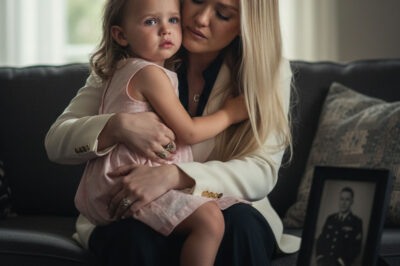









:max_bytes(150000):strip_icc():focal(736x326:738x328)/zendaya-tom-holland-spider-man-scenes-london-080825-181cec82276341059cacbf48afb3cd63.jpg)






















 The presenter sparked a social media frenzy last month when she claimed that she caught her ex Graham Quinn being unfaithful with an unnamed female celebrity (pictured in 2005)
 Rochelle Humes recently raised eyebrows when she shared a snap of her husband Marvin alongside Graham on a recent holiday, following Myleene’s claims
 The former One Show presenter left fans reeling when she dropped the explosive claim that ex-husband cheated on her with a female celebrity in a very honest chat with Paul C Brunson