Blog

  • “CAN’T WAIT!” — Michelle Keegan FLOODED With Support After Making “Special” Announcement That Sends Fans Into – News

    Michelle Keegan flooded with support as she makes ‘special’ announcement

    She’s up to something with Sky…

    Michelle Keegan has caused a stir after she teased that “something special” is coming soon…

    The 38-year-old mum of one has been a staple on screens since shooting to fame on Coronation Street in 2007. What’s more, earlier this year, she became a mum for the first time when she and Mark Wright welcomed daughter Palma.

    And despite initially revealing she was going to take a step back from the spotlight, Michelle is busier than ever.

    Now, Michelle has issued a huge career update revealing she has filmed “something special”.

    Michelle Keegan on TV appearance
    Michelle’s latest post sent her fans in a frenzy (Credit: ITV)

    Michelle Keegan’s busy 2025

    2025 has already been a busy and eventful year for Michelle. As well as welcoming her first child, her career has gone from strength to strength.

    Earlier this year, she wrapped up filming for the final series of hit show Brassic. Meanwhile, last month, it was announced that Michelle is set to star in a new ITV thriller called The Blame.

    At the weekend, Michelle took to her Instagram and shared a slew of behind-the-scenes snaps from a project with Sky.

    Fans ‘can’t wait’ for Michelle’s project

    In the photos, Michelle could be seen surrounded by a film crew while she walked down a road. The TV star looked sensational and rocked a yellow two-piece for the project.

    Michelle captioned the post: “Excited to be working with @sky_uk on something special… stay tuned for what’s coming.”

    And it didn’t take Michelle’s fans long to share their excitement. In the comments section one person wrote: “Can’t wait to see what it is.”

    Someone else added: “So excited.” A third then gushed: “The outfit omg.”

    Michelle Keegan on This Morning
    She is currently filming a new drama (Credit: ITV)

    Michelle’s new ITV drama

    Michelle is currently filming a new six-part drama for ITV called The Blame. In the show she plays detective DI Crane, who “must navigate both a murder investigation and the treacherous politics inside her own team”.

    Also joining the stellar cast are The Sandman’s Douglas Booth and Ian Hart, aka Professor Quirrell from Harry Potter.

    ITV’s Director of Drama described The Blame as “full of surprising twists and a compelling investigation”. Polly Hill added that it “also cleverly tackles police corruption, exploitation and misogyny as the thriller unravels”.

  • Thug Slapped an 81 Year Old Veteran in a Diner — Then His Son Walked In With the Hells Angels… – News


    In a quiet diner, an old man sat alone, trembling but proud. Moments later, a thug’s hand cracked across his face, silencing the room. Nobody moved. Nobody spoke. But 1 hour later, the door swung open and the silence broke. When his son walked in with Hell’s Angels, welcome to Shadows of Dignity.

     Before we begin, comment below where you’re watching from and subscribe to our channel. Your every comment, gift, and membership helps us bring more heartfelt stories to your life. The sun had barely risen over Ashefield. A small town where time seemed slower than the world outside. Inside a corner diner, Earl Whitman, 80 years old, sat at his usual booth by the window.

     Earl wasn’t just another old man. He was a veteran who had seen things most people couldn’t imagine. His hands shook slightly when he lifted his coffee cup, but his eyes blue and piercing, still held a quiet strength. Regulars knew him, nodded at him, but few really knew his story. To most, he was just the man who ordered black coffee and toast every morning.

     But behind those weathered lines on his face lived memories of war, of brothers lost, and sacrifices nobody in that diner would ever understand. That morning felt like any other, filled with the smell of bacon and eggs, the chatter of waitresses, and the low hum of an old jukebox until the bell above the door rang and a different kind of energy entered.

     The man who walked in didn’t belong in Ashefield’s diner. He was younger, mid-30s, with a leather jacket draped carelessly over his shoulders and anger resting heavily in his stride. His boots hit the tile floor with sharp echoes as though each step was a challenge. His name was Trevor Cole, though no one asked and no one dared to. He scanned the room, his smirk dripping with arrogance.

     Some people lowered their eyes, hoping not to catch his attention. He carried with him the kind of energy that demanded trouble. He didn’t sit quietly like the rest. He slammed himself into a booth, shouted for coffee, and tapped his fist against the table impatiently. His voice was harsh, grading, the type that filled a room even when he wasn’t speaking.

     Earl noticed him, but said nothing. He had lived long enough to know storms when they were coming. But the storm was closer than anyone realized, and it was about to break right over Earl. Earl sat quietly, buttering his toast with slow, deliberate hands. Trevor kept glaring across the room as if searching for a target.

     The waitress, nervous but polite, tried to keep her voice steady when she brought his coffee. Trevor sneered at the cup. Is this all you people can make? Mud water. His tone dripped with contempt. People shifted uncomfortably in their seats, pretending not to listen, though everyone’s ears were burning. Earl, who had always believed in respect, even for strangers, raised his voice just enough to be heard.

     Young man, no reason to talk to her that way. She’s just doing her job. The diner grew still. Trevor slowly turned his head toward Earl, his smirk twisting into something cruel. What did you just say, old man? Earl didn’t flinch. His hands rested calmly on the table. I said, “Be kind. It doesn’t cost you anything.” For a moment, silence held the room. And then Trevor stood.

    Trevor walked slowly toward Earl’s booth. Each step deliberate, savoring the fear rising in the diner. Earl didn’t move, didn’t even blink. When Trevor reached the booth, he leaned close, his voice dripping with mockery. “Kindness? What’s an old fossil like you know about kindness? Without warning, his hand lashed out.

     A sharp crack filled the air as Trevor’s palm struck Earl’s cheek. The sound silenced everything. The clatter of dishes, the hum of the jukebox, even the waitress’s nervous breaths. Earl’s face turned slightly with the force, but his eyes never left Trevor’s. No anger, no fear, just a calm, quiet dignity. Trevor smirked, pleased with himself.
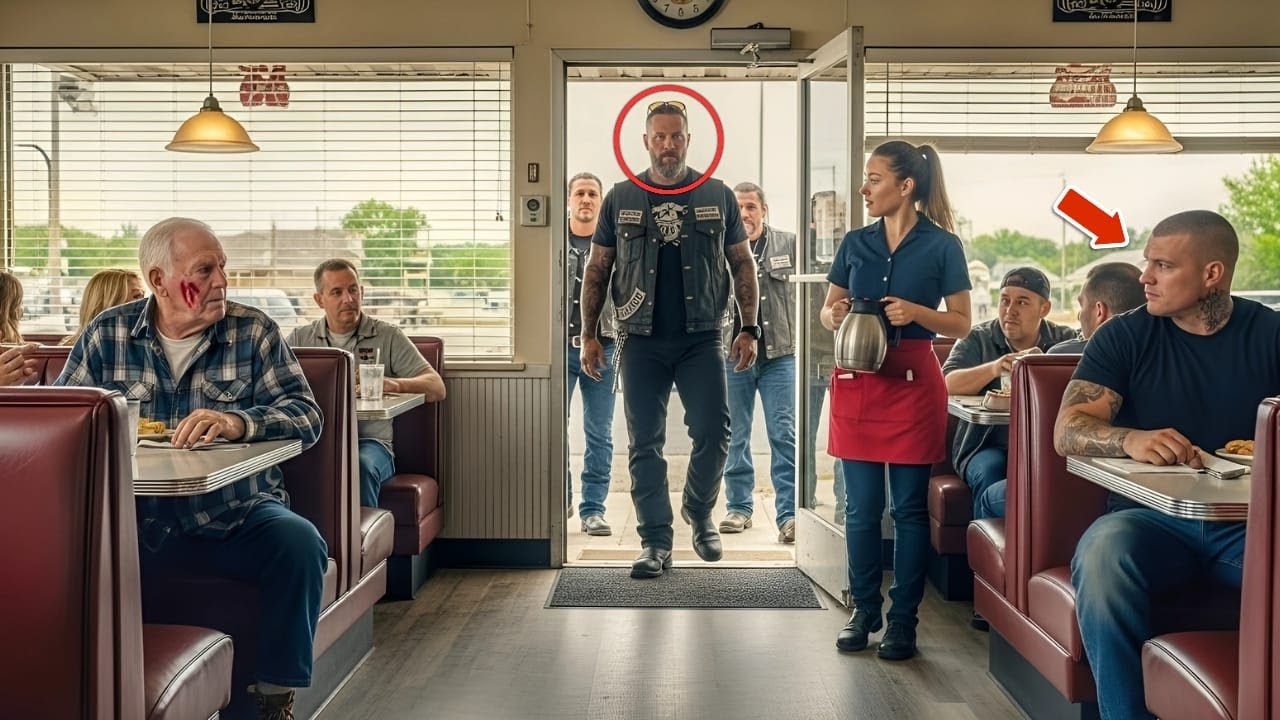


     That’s what kindness gets you. He spat, straightening up and looking around the diner, daring anyone to challenge him. Nobody moved. Nobody spoke. The room froze in shame and helplessness. Earl slowly dabbed the corner of his mouth with a napkin. His voice was soft, but steady. You don’t know what battles really are, son.

     The diner stayed frozen in heavy silence. Trevor strutted back to his booth. Proud of his display, he sipped his coffee like a man who had just claimed a throne, but the customers couldn’t meet each other’s eyes. Shame lingered in the air. Not just for Trevor’s cruelty, but for their own silence. Earl sat with his toast untouched, his hand trembling slightly now. He didn’t cry. He didn’t shout.

     He simply sat, shoulders squared, as if holding back years of memories only he could carry. The waitress, her eyes wet, whispered, “I’m so sorry, Mr. Whitman.” Earl gave her the faintest smile. A smile that carried both forgiveness and sorrow. “Not your fault, dear.” Trevor laughed loudly, forcing the room to stay under his grip.

     “See, old man knows his place. He believed the moment belonged to him. What he didn’t know was that time had its own way of balancing the scales. Earl sat still, but inside memories stirred like restless ghosts. He remembered being 18, crouched in trenches far from home, mud in his boots, fear in his chest. He remembered brothers who never came back, men who had given everything for one another.

    And he remembered why he had survived. because someone had taught him that courage wasn’t about fists or noise. It was about standing tall when the world tried to break you. Earl didn’t care about the slap. His body was old and pain was no stranger. What cut deeper was the silence in the diner. The way everyone pretended nothing had happened.

    The way no one defended dignity. He didn’t hate them. He understood. Fear is heavy. The silences the strongest voices. Still, he whispered a quiet prayer, not for himself, but for the stranger who carried so much darkness in his heart. Trevor smirked across the room, thinking the war was over. But Earl knew battles often end differently than they begin.

     At a booth near the back, a young man in his 20s shifted uncomfortably. He wore a baseball cap pulled low, hiding his eyes. He wanted to stand to say something, but fear chained him to his seat. He looked at Earl, ashamed. Then back at Trevor, whose laughter filled the room. The waitress, trembling, poured another cup of coffee, her hands shaking so badly some spilled on the counter.

     She bit her lip, glancing at Earl, silently begging for forgiveness. Earl caught her eye and gave the smallest nod as if to say, “It’s all right.” That nod lit a spark in the young man’s chest. But before he could rise, Trevor slammed his hand on the table again. Nobody got anything to say. That’s what I thought.

    His grin widened, feeding on silence. Outside, the sound of a motorcycle engine faintly echoed in the distance. No one noticed yet, but soon that sound would grow louder. And with it, everything inside the diner would change. Time slowed in that diner. Every tick of the old wall clock sounded louder, heavier, like a countdown.

     Earl sipped his cooling coffee, the taste bitter, but grounding. Trevor stretched out in his booth, arms spread wide like a king surveying his domain. Customers shifted nervously, eyes darting toward the door, hoping someone might walk in, someone who could stand where they could not. Earl thought of his son, Caleb.

     He hadn’t seen him in weeks. Caleb worked long hours as a mechanic in the city. His life rough around the edges, but filled with loyalty and grit. Earl had raised him to respect others, to fight only when he must. But he also knew Caleb carried a fire inside him, a fire that once lit could not easily be put out.

     Earl whispered his son’s name under his breath, a prayer more than a hope. Caleb wasn’t here. Not yet. But outside that faint motorcycle rumble grew closer. A storm was rolling toward the diner. Trevor, restless, stood again and looked directly at Earl. You know what your problem is, old man? You think respect matters, but respect is weakness.

     His words dripped venom, his grin daring anyone to argue. Earl held his gaze, his voice steady. Respect is the only strength that lasts. Trevor laughed, sharp and cruel. He looked around the diner, his eyes locking on the young man in the baseball cap. What about you, kid? Want to play hero? Stand up and I’ll knock you down twice as hard.

     The young man froze, shame washing over him. And Trevor smirked triumphantly. He turned back to Earl, towering over him. You think you’re tough? Tell me, what’s toughness look like now? Huh? Earl’s silence was his answer. Not weakness, but defiance. Trevor leaned closer, whispering, “You’ve got no one left to fight for you.

    ” Just then, the roar of multiple motorcycle engines thundered outside. Trevor’s smirk faltered just slightly. The clock struck noon and the storm entered. The sound shook the glass windows. Deep growling engines that made the diner vibrate. Every head turned toward the door as it swung open. The air changed instantly. Leather jackets, heavy boots, and the unmistakable presence of men who carried themselves with unshakable authority.

     At their center was Caleb Whitman, Earl’s son. Broad shouldered with grease still under his fingernails. Caleb walked with the calm stride of someone who didn’t need to prove a thing. Around him were members of the hell’s angels. Their patches bold, their presence undeniable. The diner inhaled as one, the silence thick with awe and fear.

     Caleb’s eyes found his father immediately. He saw the red mark on Earl’s cheek, his jaw tightened, his hands curled into fists. Without a word, Caleb walked across the room, every bootstep echoing like a drum beep. Trevor leaned back. suddenly less certain. The balance of power shifted in an instant, and for the first time that morning, Trevor’s grin began to fade.

    Caleb reached his father’s booth and dropped to one knee beside him. He didn’t speak at first. He just looked into Earl’s eyes. Earl’s calm gaze met his son’s fiery one. And in that silent exchange, more was said than words could carry. Caleb’s voice finally broke the silence. Low and rough. Who did this? Earl, steady as ever, placed a hand gently on his son’s arm.

     It’s all right, Caleb. Let it be. But Caleb’s eyes lifted, finding Trevor across the diner. The hell’s angels stood behind him like shadows, their presence filling every corner. Trevor shifted in his seat, his arrogance now tinged with unease. He tried to smirk, but it wavered. Caleb stood, his voice carrying weight.

     Stand up. The room tensed. The young man in the baseball cap leaned forward, holding his breath. Trevor’s hand twitched nervously on the table. The silence wasn’t fear anymore. It was expectation. Everyone waited for what would come next. Trevor hesitated. For the first time, he looked smaller. But pride, that dangerous fuel, pushed him to stand.

     He rose slowly, trying to steady his breath, trying to mask his shaking hands. Caleb didn’t move closer. Not yet. His voice stayed calm, almost too calm. You think it makes you strong to hit an old man? Trevor forced a laugh. He had it coming. Caleb’s eyes darkened. That’s my father. The words struck harder than fists.

     The hell’s angels shifted subtly, their weight leaning forward, silent but ready. The entire diner held its breath, afraid even the clink of a coffee cup might shatter the moment. Trevor puffed his chest, trying to reclaim the swagger slipping from him. “What? You going to teach me a lesson with your gang?” Caleb shook his head slowly.

     “I don’t need them to deal with you.” The room froze. This wasn’t about numbers. It was about truth. Earl’s hand reached out, grasping Caleb’s wrist with surprising strength. “Son,” he said firmly, his voice cutting through the tension. “Don’t.” Caleb looked down, torn between rage and respect. Earl’s voice softened, yet carried the weight of years.

     “This isn’t your fight. This his burden, not yours.” Caleb clenched his jaw, struggling against the storm inside him. The hell’s angels watched silently, bound by loyalty, but respecting the father’s words. Trevor saw an opening, smirking again. That’s right. Hide behind Daddy’s wisdom. But Earl’s eyes locked on him, sharp and unflinching.

     You mistake restraint for weakness. That’s your greatest blindness. Trevor’s smirk faltered again. The room’s energy shifted, not because of violence, but because of something far stronger, dignity. Caleb exhaled, his fists loosening, though his body still shook with unspent fire. The young man in the baseball cap swallowed hard, realizing he was witnessing not just strength, but legacy, the passing of a lesson from father to son.

     The silence in the diner grew heavier, pressing against every wall. Trevor tried to laugh, but it rang hollow now like a man trying to convince himself. Caleb stood firm, not moving, letting the silence weigh on Trevor’s shoulders. The waitress, her hands still trembling, finally spoke, her voice cracking.

     Why don’t you just leave? Trevor turned sharply, glaring at her, but the courage in her eyes stopped him. One by one, other customers lifted their gaze, no longer shrinking away. The young man in the baseball cap straightened in his seat. A couple in the corner, who had kept their heads down, nodded slowly. For the first time, Trevor wasn’t facing one man or even a gang.

     He was facing a room filled with quiet resistance. Earl’s words had taken root. Respect was rising like a tide. Trevor’s arrogance cracked under the weight. His fists curled, but his confidence was gone. He was no longer in control, and he knew it. Trevor’s breathing quickened. He scanned the room, desperate for the control he had felt only minutes ago.

     But now every pair of eyes bore into him, not with fear, but with judgment. His shoulders slumped slightly, though he tried to disguise it with another smirk. Caleb stepped forward just once, closing the distance by a single step. That step carried the weight of everything, the motorcycles outside, the hell’s angels behind him, and the bloodline of a man who had survived war.

     Trevor’s smirk flickered. He tried to speak, but his throat tightened. “This This doesn’t mean anything,” he muttered, but the words lacked power. Earl spoke again, voice calm, but commanding. It means everything. It means your fists don’t rule here. Respect does. Trevor looked at Earl. Truly looked and saw not just an old man, but someone unbroken, someone stronger than he could ever be.

    For the first time, Trevor’s eyes lowered, and that was his defeat. The diner’s door seemed farther than it was. But Trevor finally moved toward it. His steps dragged, no longer sharp and commanding. The room stayed silent, watching. Each face that had once turned away now looked straight at him. Unafraid, the waitress stood tall, her shoulders squared.

     The young man in the baseball cap removed it, revealing his eyes at last, steady and unflinching. Trevor’s boots scuffed against the floor, his swagger gone. He pushed open the door, the bell above it chiming weakly. Outside, the roar of motorcycles waited. A wall of sound reminding him of what he had lost. He didn’t look back.

    He couldn’t. The diner exhaled as one, the heavy air releasing at last. Earl sipped his cold coffee, finally setting the cup down. Caleb sat across from him, his fists still tense, but his eyes softening as he looked at his father. Respect had been defended not by violence but by dignity and the lesson lingered.

     Caleb leaned forward, his voice low, almost breaking. I should have, Earl interrupted gently. No, son. You did exactly what you needed to. You stood. And sometimes standing doesn’t mean striking. Sometimes it means holding back. Caleb’s jaw trembled. He had always believed strength meant action. But watching his father, weathered yet unbroken, he understood something deeper.

     The Hell’s Angels, men known for toughness, stood silently, their respect for Earl etched into their eyes. Even they recognized the power of restraint. Caleb nodded slowly, his chest loosening, the fire inside settling into something steadier. “I get it now,” he whispered. Earl smiled faintly. Good, because the world doesn’t need more fists. It needs more hearts.

    The young man in the baseball cap finally rose, walked to Earl’s booth, and said softly, “Thank you, sir.” His voice trembled, but courage lived in it. Earl nodded. Courage was contagious, and it had finally filled the room. The diner slowly returned to life. Conversations resumed, tentative at first, then warmer.

     The jukebox hummed again, filling the silence with soft music. Plates clattered, coffee poured, and the air felt lighter, almost sacred. The waitress placed a fresh cup of coffee in front of Earl, her hands steady now. “On the house,” she said with a smile. Earl thanked her, lifting it carefully, savoring the warmth. Caleb leaned back, watching his father with new eyes.

     Not just as a parent, but as a man who carried an unshakable truth. The Hell’s Angels quietly filled the booths around them, their laughter low, but respectful, like guardians at ease. The young man in the baseball cap sat taller now, confidence flickering in him like a new flame. The diner wasn’t just a place for breakfast anymore.

     It had become a place where silence had been broken, where dignity had stood firm, and where a lesson had been planted in every soul present. As the afternoon sun poured through the windows, Earl turned to his son. “Caleb,” he said softly. “A man’s true strength isn’t measured by how hard he hits. It’s measured by what he protects.

    ” Caleb swallowed, the words sinking deep into him. He looked at his father, the red mark still faint on his cheek, and felt both pride and sorrow. Pride because his father had stood tall. Sorrow because the world was often cruel to men who carried such dignity. Earl reached across the table, his weathered hand gripping Caleb’s firmly.

     “Promise me, son. When the world pushes you, don’t just push back. Stand taller. That’s how you’ll honor me.” Caleb’s eyes misted, but he nodded firmly. I promise, Dad. The jukebox played a soft tune, almost like a hymn. Outside, the motorcycles rumbled again, ready to roll. Inside, an old soldier passed down the final truth of his battles.

     When Earl finally stood, the diner rose with him, not out of obligation, but respect. He tipped his cap politely to the waitress, smiled at the young man in the baseball cap, and patted his son’s shoulder. Together, they walked to the door. The hell’s angels falling in step behind Caleb like silent guardians.

     As they left, sunlight spilled across the diner floor, brighter than before. The customers sat in silence again, not out of fear, but reflection. They had witnessed something rare. Not fists against fists, but dignity against arrogance. Outside, Earl lifted his face to the breeze. The roar of motorcycles surrounding him like an anthem.

     He closed his eyes, whispering words no one else could hear. Respect always wins. Caleb looked at his father, not as a fragile old man, but as the strongest man he had ever known. The road stretched ahead, endless and alive, and together they walked into the light. In a world that often confuses power with cruelty, Earl reminded us all that true strength is found in respect.

     If this story touched you, share it with someone who needs hope today. Don’t forget to like, subscribe, and press the bell icon for more heartfelt stories.

     

  • The Lynyrd Skynyrd Mystery Finally Solved And It Isn’t Good | HO!! – News

    The Lynyrd Skynyrd Mystery Finally Solved And It Isn’t Good | HO!!

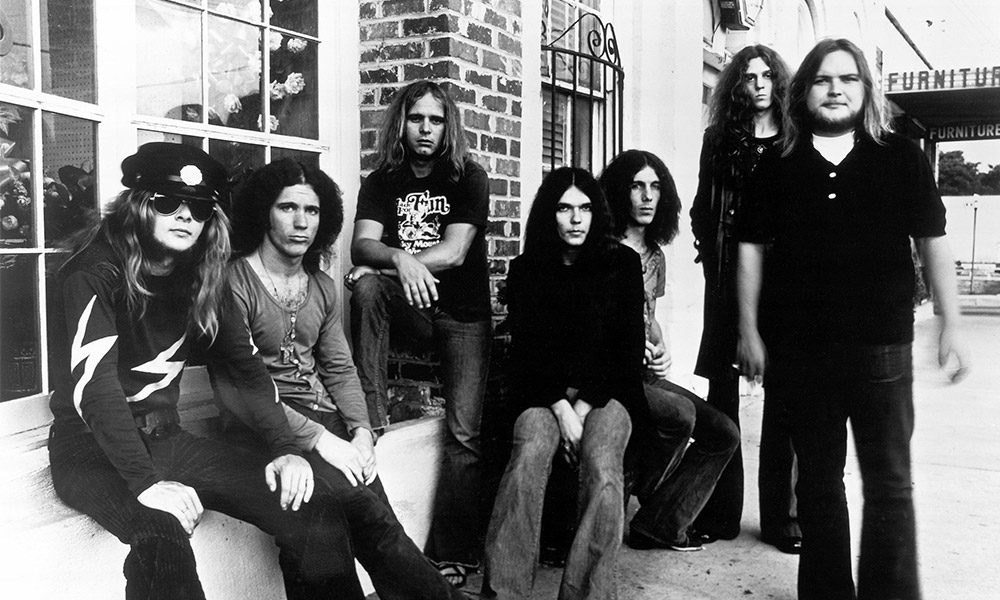
    Lynyrd Skynyrd - Capitol International Group

    When Lynyrd Skynyrd’s plane crashed into a Mississippi swamp on October 20, 1977, the world lost more than just a legendary frontman and a rising guitar prodigy. It lost a band that had come to embody the raw energy and defiant spirit of Southern rock. For decades, the tragedy has been shrouded in rumors, half-truths, and myths. Was it just bad luck? A cursed aircraft? Fate? The truth, as revealed by decades of investigation and survivor testimony, is far more disturbing—and far more preventable.

    This is the real story behind Lynyrd Skynyrd’s fiery end: a tale of ignored warnings, eerie premonitions, and a series of human errors that turned a band’s rise to immortality into an avoidable fall.

    A Band on the Brink of Legend

    By the mid-1970s, Lynyrd Skynyrd was more than a band—they were a movement. Their gritty blend of Southern rock, blues, and honest, working-class lyrics had taken them from Jacksonville’s rough bar scene to sold-out arenas across the nation. Ronnie Van Zant led the charge with his sharp wit and magnetic presence, backed by the likes of Gary Rossington, Allen Collins, Leon Wilkeson, Billy Powell, and Artimus Pyle. The addition of guitarist Steve Gaines brought a new electricity to their sound, pushing the band to new creative heights.

    Their music wasn’t just about rebellion—it was about craftsmanship. Anthems like “Gimme Three Steps,” “Simple Man,” and “Tuesday’s Gone” weren’t accidents; they were tightly constructed stories that resonated with millions. And then there was “Free Bird,” a song that transcended genre, becoming a generational anthem and a staple at every show.

    By 1977, Skynyrd was on the verge of crossing into Rolling Stones territory—not just stars, but legends. Their latest album, Street Survivors, was hailed as their most ambitious work yet, and their tour was selling out nationwide. Everything pointed to a future of creative rebirth and international stardom.

    But just as they were poised to break through to a new level, they boarded a plane that should never have left the ground.

    The Plane Everyone Avoided

    Lynyrd Skynyrd - Legendary Southern Rockers | uDiscover Music

    The Convair 240 that carried Lynyrd Skynyrd on their fateful flight was already infamous in rock circles. Built in 1948, the aircraft had logged more than 29,000 hours in the sky and changed hands multiple times. Most commercial airlines had retired the model years earlier. It was old, battered, and, as it turned out, dangerous.

    Months before Skynyrd’s tour, Aerosmith’s management had considered chartering the same Convair 240. Their inspection revealed pilots drinking Jack Daniels in the cockpit and a host of maintenance issues. Aerosmith not only rejected the plane—they warned other bands to stay away.

    But Skynyrd’s management, facing a punishing tour schedule and tight budgets, saw the Convair as a convenient solution. It allowed the band to travel quickly, avoid long drives, and keep up with relentless bookings. The warnings were dismissed, and the plane was greenlit for the tour.

    Yet not everyone was convinced. Cassie Gaines, backup singer and sister of Steve Gaines, was terrified of flying on the Convair. After witnessing sparks from an engine on a previous flight, she considered taking the rest of the tour by ground, riding with the equipment truck rather than risking another takeoff. Her instincts were right, but she was persuaded to board the plane one last time.

    Ignored Warnings and Eerie Premonitions

    The days leading up to the crash were marked by a series of unsettling events and prophetic statements. Ronnie Van Zant, known for his blunt honesty, began making remarks that chilled those around him. “Daddy, I’ll never be 30,” he told his father repeatedly. To drummer Artimus Pyle in Tokyo, he said, “I’m going out with my boots on.” These weren’t just bravado—they felt like fixed beliefs. Van Zant seemed to sense something coming.

    Cassie Gaines’s fear escalated as she saw more signs of trouble. After seeing sparks from an engine, she told friends she didn’t want to fly again. But Van Zant, ever the fatalist, comforted her with chilling words: “If it’s your time to go, it’s your time to go.” What sounded like reassurance now reads as prophecy.

    The band’s final flight was preceded by yet another warning: the engine had shown signs of malfunction earlier in the week. Crew members voiced concerns, and some passengers considered alternative travel. But the flight schedule didn’t change, and the aircraft wasn’t replaced. The possibility of switching to a Learjet was floated, but not acted on in time.

    How It All Went Wrong

    Zeitsprung: Am 13.8.1973 erscheint das erste Lynyrd-Skynyrd-Album. - The  Circle

    When Lynyrd Skynyrd’s Convair 240 took off from Greenville, South Carolina, bound for Baton Rouge, Louisiana, the warning signs had already piled up. But what brought the plane down wasn’t fate or some freak mechanical event—it was human error, plain and devastating.

    The National Transportation Safety Board (NTSB) investigation later confirmed the most damning detail: the plane simply ran out of fuel. The crew had failed to monitor fuel levels accurately, operating the aircraft with an “auto-rich” fuel mixture—a setting meant for takeoff or climbing, not cruising. This setting burns fuel far faster than normal, and no one corrected it.

    As the plane neared its destination, the right engine failed first, followed by the left. The pilots, realizing their mistake too late, attempted to transfer fuel from one tank to another to stabilize the engines. In a grave miscalculation, they vented the remaining fuel overboard instead of transferring it, losing precious minutes they desperately needed.

    The Convair slammed into the woods near Gillsburg, Mississippi. Both pilots were killed instantly. The fuselage shattered, the wings sheared off, and the wreckage scattered. Ronnie Van Zant, Steve Gaines, Cassie Gaines, and assistant road manager Dean Kilpatrick died on impact. Twenty others sustained serious injuries.

    All of this happened because of something that should never occur on a professional flight: a complete failure in basic fuel management.

    The Last Ten Minutes

    Survivors describe the final moments of the flight as chillingly calm. There was no panic, no screaming—just a quiet dread as the engines died and the plane began its fatal descent. Keyboardist Billy Powell called it “the quietest and strangest moment of my life.” Passengers clutched each other, praying, closing their eyes, waiting for the inevitable.

    Ronnie Van Zant, reportedly exhausted, was lying on the cabin floor, asleep and unaware of the catastrophe about to unfold. Cassie Gaines, who had feared this moment for days, was awake and terrified. Artimus Pyle, with broken ribs, managed to crawl from the wreckage and stumble through the swamp for help, leaving others trapped and barely conscious.

    The plane hit the tree line with brutal force. Survivors compared it to “a thousand baseball bats hitting the airplane all at the same time.” Bodies were thrown about, some pinned under debris, others ejected from the wreckage. The thick woods and murky water made it nearly impossible to tell which direction was safe.

    The Lynyrd Skynyrd Mystery Finally Solved And Isn't Good

    The Aftermath—and the Truth

    The tragedy of Lynyrd Skynyrd’s crash wasn’t just a loss for rock music—it was a stark reminder of how preventable disasters often are. The band deserved better. Had one decision been made just a day earlier—had the warnings been heeded, had the aircraft been replaced—they might still be here today.

    For years, fans and survivors have struggled with the haunting certainty that the crash wasn’t fate, but a series of ignored red flags and human mistakes. The eerie premonitions, the mechanical warnings, and the fatal errors all add up to a mystery finally solved—and it isn’t good.

    Lynyrd Skynyrd’s legacy lives on in their music, but the lesson of their final flight should echo even louder: trust your instincts, respect the warnings, and never let convenience outweigh safety. The band’s rise was meteoric, but their fall was heartbreakingly avoidable.

    If this story shook you like it shook us, let it be a reminder: legends aren’t invincible, and history’s darkest mysteries often have the simplest, most tragic answers.

    News

    Victoria Rowell makes HEARTBREAKING CONFESSION| Nobody Saw COMING!! | HO!!

    Victoria Rowell makes HEARTBREAKING CONFESSION| Nobody Saw COMING!! | HO!! Hollywood is no stranger to drama, but few stories hit…

    Son Murders Mom And Dad During Father’s Day Sermon In Church, Few Hours After Receiving A Letter. | HO

    Son Murders Mom And Dad During Father’s Day Sermon In Church, Few Hours After Receiving A Letter. | HO On…

    Nathaniel Taylor ‘Rollo’ Was THE MOST Dangerous ACTOR IN HOLLYWOOD?! | HO

    Nathaniel Taylor ‘Rollo’ Was THE MOST Dangerous ACTOR IN HOLLYWOOD?! | HO Nathaniel Taylor’s career is a Hollywood story that…

    Nathaniel Taylor “Rollo” Was THE MOST Dangerous ACTOR IN HOLLYWOOD?! | HO

    Nathaniel Taylor “Rollo” Was THE MOST Dangerous ACTOR IN HOLLYWOOD?! | HO Nathaniel Taylor’s career is a Hollywood story that…

    Nathaniel Taylor ‘Rollo’ Was THE MOST Dangerous ACTOR IN HOLLYWOOD?! | HO

    Nathaniel Taylor “Rollo” Was THE MOST Dangerous ACTOR IN HOLLYWOOD?! | HO Nathaniel Taylor’s career is a Hollywood story that…

    Grandmother Kept ‘Falling Out Of Wheelchair.’ Grandson Calls Police After Seeing CCTV Footage | HO

    Grandmother Kept ‘Falling Out Of Wheelchair.’ Grandson Calls Police After Seeing CCTV Footage | HO When Michael’s elderly mother, Kathy,…


    End of content

    No more pages to load

    Next page

  • BREAKING: Zachary Bolduc STUNS the hockey world by GRABBING the Canadiens’ offer that his fellow young star REJECTED, triggering WILD rumors of behind-the-scenes BETRAYAL, secret negotiations, and a SHOCKING power struggle that could SHAKE the very foundations of montreal’s rebuilding strategy for years to come! – News

    Behind Closed Doors: How Zachary Bolduc’s Bold Decision Is Shaking Up the Montreal Canadiens’ Offseason—and Why Ivan Demidov’s Refusal Could Change Everything

    The Montreal Canadiens, a team long known for its rich history and passionate fanbase, are once again at the center of the hockey world’s attention—but this time, it’s not just about blockbuster trades or high-profile signings. Instead, the latest drama is unfolding quietly, behind closed doors, where crucial decisions and surprising player personalities are shaping the future of the franchise in ways no one could have predicted.

    Dec 5, 2024; Calgary, Alberta, CAN; St. Louis Blues center Zachary Bolduc (76) skates against the Calgary Flames during the first period at Scotiabank Saddledome. Mandatory Credit: Brett Holmes-Imagn Images

    Photo credit: Brett Holmes-Imagn Images

    The Summer of Demands: Canadiens’ Front Office Turns Up the Heat

    Every summer, NHL teams look for ways to improve, both on and off the ice. For the Canadiens, this offseason has been anything but ordinary. Sources close to the organization reveal that Montreal’s front office, under the watchful eyes of Jeff Gorton and Kent Hughes, has been aggressively pushing for player development—specifically targeting their young forwards with a simple but demanding request: master the art of the faceoff.

    Why faceoffs? In today’s NHL, puck possession is everything. Winning a draw can mean the difference between a game-winning goal and a crushing defeat. The Canadiens, who have struggled in the faceoff circle in recent years, know that shoring up this weakness could be the key to unlocking their full potential.

    But not everyone is on board with the plan.

    Ivan Demidov: The Reluctant Star

    Enter Ivan Demidov, the electrifying young Russian forward who has already captured the imagination of Canadiens fans with his dazzling skillset and fearless play. Demidov, projected by many to be a future star, was approached by the Canadiens’ staff with a clear message: if you want to be a center in this league, you need to dedicate yourself to faceoff mastery.

    However, in a move that has left many in the organization stunned, Demidov flatly refused. According to sources, Demidov “wants nothing to do with faceoffs,” preferring instead to focus on his offensive creativity and playmaking abilities. For some, this decision speaks to a larger trend among young, highly skilled players who bristle at the idea of being pigeonholed or forced into roles that don’t align with their strengths.

    Yet, for the Canadiens, Demidov’s refusal is more than just a personal preference—it’s a potential roadblock in their quest to build a winning roster. The front office’s frustration is palpable, but their determination to find solutions has only grown stronger.

    Zachary Bolduc: The Challenger Who Said Yes

    While Demidov’s decision made headlines, what happened next could prove even more pivotal for Montreal’s future. The same request—to work intensively and seriously on faceoffs—was made to another young forward, Zachary Bolduc. Unlike Demidov, Bolduc didn’t hesitate. He accepted the challenge, embracing the opportunity to develop a skill that could set him apart from his peers.

    Bolduc’s commitment caught the attention of the Canadiens’ brass, but it was his willingness to work one-on-one with Marc Bureau—a respected faceoff specialist and mentor—that truly set him apart. According to the always-reliable Marco Normandin, Bolduc is now engaged in intensive, personalized training sessions with Bureau, focusing on every aspect of the draw: hand positioning, leverage, timing, and the subtle tricks that separate the good from the great.

    Insiders say Bolduc’s attitude has been nothing short of exemplary. “He’s hungry,” one team source said. “He wants to prove himself, and he’s willing to do the work. That’s the kind of mentality that changes teams.”

    The Ripple Effect: Second-Line Center Drama

    Bolduc’s newfound dedication has not gone unnoticed by the Canadiens’ leadership. Despite not being named as a top candidate for the second-line center role in a recent interview with Jeff Gorton, Bolduc is now being seriously considered for the position—a move that would have seemed unthinkable just weeks ago.

    Why the sudden change? It’s simple: the Canadiens need centers who can win faceoffs, especially with Demidov’s reluctance to take on the role. Bolduc’s willingness to accept the challenge has made him an increasingly attractive option, not just as a stopgap, but as a potential long-term solution down the middle.

    And with the possibility of a future line featuring Patrik Laine, Ivan Demidov, and Zach Bolduc, the Canadiens may have stumbled upon a combination that could redefine their offensive identity for years to come.

    Locker Room Dynamics: Drama or Opportunity?

    Of course, with any major shift in team dynamics comes the potential for drama. Some insiders wonder whether Demidov’s refusal and Bolduc’s acceptance could create friction in the locker room, especially if the latter is rewarded with a more prominent role. Will Demidov feel slighted? Could this spark a rivalry, or will it motivate both players to elevate their games?

    So far, the mood around the team remains positive, with most players expressing support for each other’s decisions. But as training camp approaches and roster battles intensify, all eyes will be on how these two young stars handle the pressure—and whether their divergent paths will ultimately bring the Canadiens closer together or drive them further apart.

    The Front Office: No Stone Left Unturned

    One thing is certain: you can’t fault the Canadiens’ management for a lack of effort. From secret meetings to bold proposals, Gorton, Hughes, and their team are leaving no stone unturned in their quest to build a contender. Their willingness to challenge players, push boundaries, and adapt on the fly is a testament to their commitment to excellence.

    Still, the outcome of these behind-the-scenes maneuvers remains uncertain. Will Bolduc’s hard work pay off? Can Demidov’s raw talent shine, even without a focus on faceoffs? And most importantly, will the Canadiens’ gamble on player development yield the results they so desperately crave?

    The Road Ahead: Promise and Peril

    As the offseason drama continues to unfold, one thing is clear: the Montreal Canadiens are a team in transition, caught between the promise of their young stars and the harsh realities of NHL competition. The decisions made in these quiet summer months—often away from the cameras and headlines—could shape the fate of the franchise for years to come.

    For fans, the intrigue is irresistible. Will Bolduc emerge as the unlikely hero, the center who answered the call when others turned away? Or will Demidov’s defiant individuality prove to be the spark that ignites a new era of Canadiens hockey?

    Only time will tell. But one thing is for sure: in Montreal, the most interesting stories are often the ones you never see coming.

    News

    BREAKING — MAHOMES DEMANDS RESPECT: In a moment that sent shockwaves through the NFL, Kansas City Chiefs superstar Patrick Mahomes stepped forward with unflinching fire to address the scandal that pulled Jimmy Kimmel Live! off the air. He wasn’t just giving an opinion — he was demanding accountability…

    BREAKING — MAHOMES DEMANDS RESPECT: In a moment that sent shockwaves through the NFL, Kansas City Chiefs superstar Patrick Mahomes…

    AUSTON MATTHEWS FED UP: Superstar SNAPS as relentless questions about Mitch Marner push him to the edge, fueling rumors of growing tension and frustration inside Maple Leafs’ locker room. SHOCKING reaction leaves media stunned and fans wondering if Toronto’s top duo is headed for a dramatic split!

    Auston Matthews is sick of answering questions about Mitch Marner “Two more weeks, then we’re done,” the Toronto Maple Leafs…

    TORONTO MAPLE LEAFS ON THE VERGE OF BLOCKBUSTER: Top NHL insider LINKS $68 MILLION superstar center to Toronto in a STUNNING twist that could TRANSFORM the franchise forever. Are the Leafs about to pull off the most JAW-DROPPING signing in recent hockey history? Fans are BUZZING with anticipation!

    As the Toronto Maple Leafs gear up for another season with hopes of finally breaking through, the buzz around the…

    BRAD MARCHAND STUNS NHL WORLD: Ex-Bruins defenseman Brandon Carlo DROPS BOMBSHELL, confirming superstar’s SECRET DESIRE to JOIN the rival Leafs. Could Boston’s most notorious agitator BETRAY his team and spark a HISTORIC shift in the battle for hockey supremacy? Fans are REELING from this SHOCKING revelation!

    As the dust settles on another dramatic NHL off-season, whispers of what could have been are echoing louder than ever…

    EXPLOSIVE CLIP LEAKED: Mitch Marner FURIOUSLY confronts Leafs teammates in SHOCKING playoff meltdown, sparking rumors of CHAOS behind the scenes. Is Toronto’s star player LOSING CONTROL at the worst possible moment, or is this the DRAMA that could DESTROY the Leafs’ Stanley Cup dreams for good?

    As the hockey world eagerly awaits the premiere of Amazon Prime’s much-anticipated second season of “Faceoff: Inside the NHL,” a…

    CONTROVERSIAL CALL TO ACTION: Analyst DEMANDS fans and media STOP attacking Arber Xhekaj for every penalty, claiming the Canadiens DESPERATELY NEED his AGGRESSIVE style to survive. Could Xhekaj’s so-called “reckless” play actually be the SECRET WEAPON Montreal needs to DOMINATE the NHL this season?

    In the aftermath of a heated showdown at the Bell Centre, one name continues to dominate the conversation among Montreal…


    End of content

    No more pages to load

    Next page

  • The Girl in Pink and the Night That Silenced a City – News

    Có thể là hình ảnh về 5 người, em bé và văn bảnCó thể là hình ảnh về 5 người, em bé và văn bản

    The night was drenched in a greenish neon haze, as if the streetlights had conspired to paint the abandoned industrial district in mystery. Wind dragged scraps of paper across the pavement, metal gates groaned with age, and the faint echo of tiny footsteps vanished between the concrete walls. There—alone in that desolate landscape—a little girl no older than five walked without direction. She wore an oversized pink sweater that swallowed her frail body and white shoes worn down by what seemed like a lifetime of suffering. Her tangled hair hid part of her face, but not the most heartbreaking part: her eyes—large, hollow, as if they had forgotten how to cry.

    The first to see her was Lieutenant Ramírez, a veteran police officer hardened by years of service, convinced nothing in the city could shock him anymore. Yet the sight of that small figure wandering through the night made him stop in his tracks as if struck by something invisible. He crouched down to her height and gently asked her name. The girl hesitated, then whispered in a voice so faint it seemed to crack with every word: “I can’t go back home.”

    That single sentence—simple yet devastating—ignited in Ramírez an urgency he had never felt before.

    She was taken to the hospital that same night. Doctors, accustomed to emergencies, froze at the sight of her injuries: bruises in different stages of healing, scars across her back that resembled old burns, and a silence more painful than any wound. As the adults surrounded her with questions and medical tools, she said nothing. She only reached for a black pencil and began to draw.

    On the paper appeared a rectangle with a slanted roof and two human figures scribbled out with furious strokes.

    A house. A scream. A mute testimony of a childhood buried in darkness.

    Ramírez couldn’t get the drawing out of his mind. To him, she wasn’t just a lost child—she was a key. A clue to something much bigger. He buried himself in school records, hospital logs, social services archives. But it was as if the girl had never existed. No official records. No family inquiries. No one looking for her.

    Following the few leads he scraped together, he tracked down a house on the outskirts of the city. A grey, run-down structure surrounded by tall, unkempt weeds—as if nature itself was trying to hide it.

    He knocked.

    From inside came the drag of metal. A dull thud. Then silence.

    No one answered.

    Ramírez walked away—but he did not let it go.

    The next day he returned with a warrant.

    And what he found inside would haunt him forever.

    In the basement lay rusted chains. Foldable beds stained with filth. Torn pieces of children’s clothing. On a table—a box filled with dozens of photographs: children with lifeless eyes, some visibly injured, all trapped in images no one had cared to see. Among them, a younger version of the same girl now resting in the hospital—smiling, but almost unrecognizably so.

    The puzzle was suddenly clear.

    She wasn’t alone.

    This wasn’t a single case—it was a system. A prison disguised as a home.

    And the most disturbing revelation? The neighborhood had known. At least suspected. An elderly woman, trembling, admitted that she had heard cries many nights—but fear had sealed her lips.

    Fear had made silence an accomplice.

    As the investigation widened, more missing children’s reports began to connect to that house of horrors. Stories of parents who never found answers. Names erased by time. Files left to gather dust. But nothing struck Ramírez harder than watching the girl continue to draw with her black pencil. Again and again—bars, closed windows, tiny hands reaching for help. In her sleep, she mumbled names no one understood, as if calling out to ghosts still trapped below.

    Ramírez became her shadow. Every day he visited her room, bringing her a stuffed teddy bear, teaching her to say “good morning” with a smile. Slowly, the ice behind her eyes began to crack.

    But he knew the war was far from over.

    Because the man responsible was still out there.

    And what lay beneath this case was bigger than one basement—it was a network. A market. A human-faced monster feeding on innocence.

    When the case finally reached the media, outrage exploded. Reporters demanded to know how a child could fall through every safety system. How no teacher, doctor, or neighbor had spoken up. Society was forced to face an ugly reflection: every ignored warning, every “not my problem,” had woven the net that had trapped her.

    The day she was discharged from the hospital, dozens of photographers waited outside. They captured an image that would make front-page news: the little girl in her pink sweater, holding Lieutenant Ramírez’s hand. Her steps were small and shaky—but symbolic.

    For the first time, a faint smile appeared on her lips. Fragile. Almost impossible.

    But real.

    Still, behind that hopeful picture lay unanswered questions.

    Who were the other children in the photographs?

    Where were they now?

    How deep did the network go?

    This story does not end at a hospital door.

    It begins there.

    With the certainty that saving one child is only the first step toward uncovering a much darker truth. Because in every city, on every street, there may be another silent house. Another closed door. Another cry no one dares to hear.

    And perhaps—right at this moment—someone is still waiting for a Ramírez to stop, look into their eyes, and say:

    “Tonight, you won’t walk alone.”

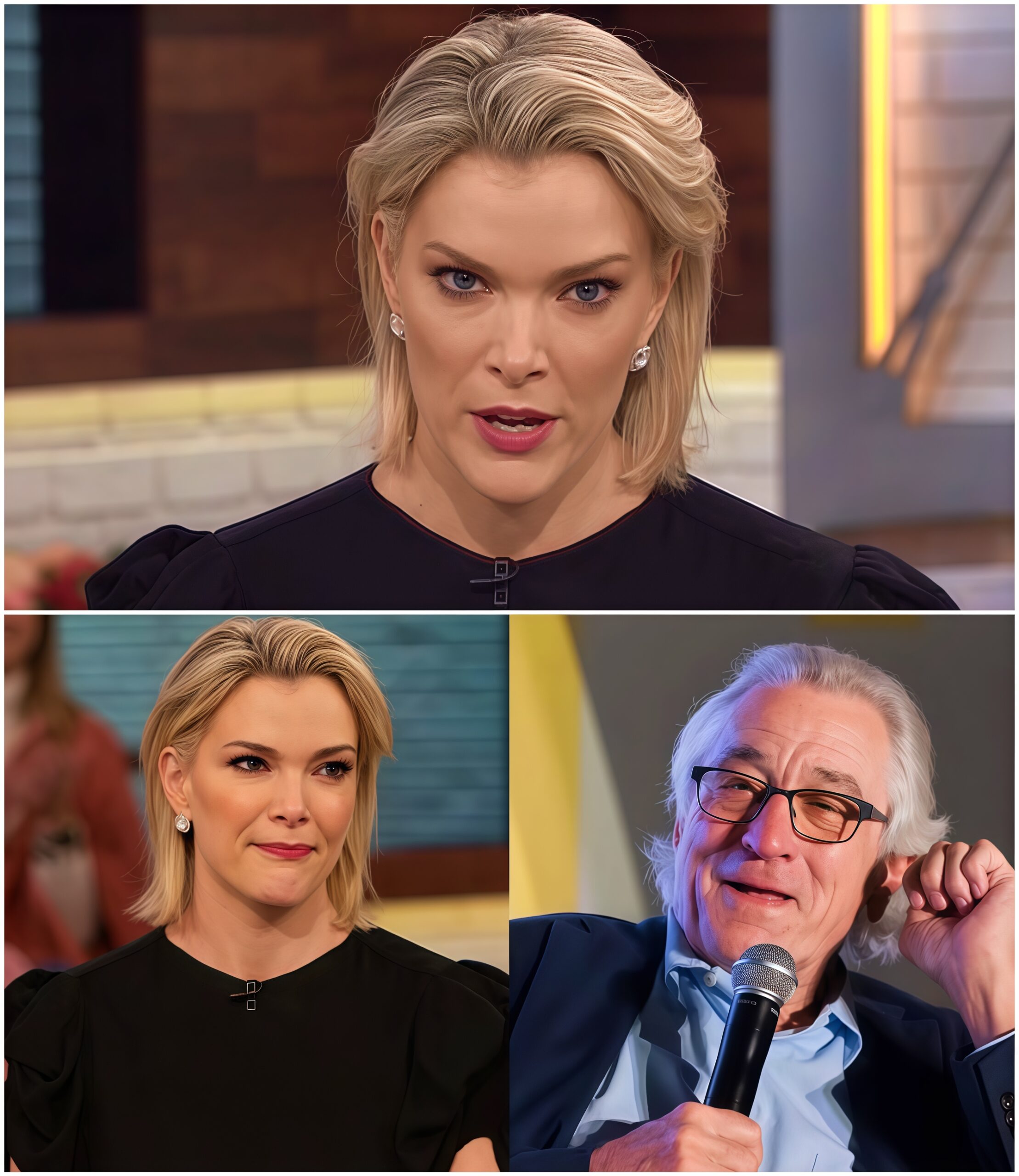
  • “I Don’t Care What You Think of Me”: Robert De Niro Silences Megyn Kelly in Tense, Viral Showdown – News

    In the high-stakes theater of live television news, a war of words between a celebrated actor and a formidable journalist is expected to produce fireworks. But in a recent, instantly legendary interview on “The Megyn Kelly Show,” Robert De Niro opted for a different kind of weapon: ice. With eight simple words, the iconic actor didn’t just answer a question; he ended the conversation, silenced the host, and created a moment of television so raw and powerful it immediately went viral, leaving a multi-million-dollar studio in stunned silence.

    The confrontation began when host Megyn Kelly, known for her sharp and prosecutorial interview style, attempted to corner De Niro on his famously outspoken and often profane criticism of conservative political figures. After a tense back-and-forth, Kelly went for the jugular, asking the two-time Oscar winner, “Don’t you think it makes you sound… extremely stupid?”

    It was a direct challenge to his intelligence, a piece of rhetorical bait designed to provoke an angry, defensive outburst. But De Niro didn’t bite. Instead, he leaned back slightly, looked at her without a flicker of agitation, and delivered a calm, devastatingly effective reply: “I don’t care what you think of me.”

    The effect was immediate and seismic. According to reports, the studio fell completely silent. In the control room, producers were reportedly unsure how to proceed. The normal rules of engagement had been shattered. Kelly, visibly thrown off balance, tried to recover by insisting she was merely asking questions on behalf of her audience. De Niro shut down that avenue as well. “I’m not here for your audience,” he stated flatly, making it clear he would not be performing for her or her viewers. He had seized complete control of the interview, not by shouting, but by calmly refusing to participate in the game.

    The fallout behind the scenes was reportedly just as dramatic. Anonymous staffers claimed Kelly was “visibly shaken” after the interview concluded, skipping the taping for her next guest and spending over half an hour debriefing with producers. She later took to social media, posting, “When guests won’t engage in honest debate, we learn nothing,” a clear attempt to reframe the encounter.

    But the public saw it differently. The clip exploded online, with hashtags like #DeNiroSilencesKelly trending for hours. The overwhelming consensus was that De Niro had masterfully won the exchange. Commentators across the political spectrum, including some conservatives, acknowledged the power of his response. By refusing to get into the mud, he had denied Kelly the viral clip of a shouting match she may have wanted and instead created a viral moment entirely on his own terms.

    De Niro’s response was a masterclass in establishing a boundary. It was a calm, assertive refusal to have his deeply held convictions questioned or mocked for the sake of television ratings. For years, De Niro has been one of the most vocal celebrity critics of the conservative movement, and his on-air confrontation with Kelly was a direct extension of that public persona. He wasn’t playing a character; he was being himself—a man at a stage in his life where the opinions of his detractors are utterly irrelevant to him.

    Industry insiders were reportedly in awe. According to the original report, CBS producers were calling it “The Moment of the Year,” with one executive allegedly captured in a leaked text message saying, “Forget the Emmy tape. This is your Pulitzer moment.” While likely an exaggeration, the sentiment speaks to the raw power of what transpired.

    This clash was more than a simple spat; it was a microcosm of the current American media landscape. It was a confrontation between a titan of Hollywood and a titan of conservative media, each representing opposing poles of a deeply divided nation. De Niro didn’t just win a debate; he rejected the terms of the debate itself, and in doing so, created a defining moment in modern television history.

    News

    LeBron James’s “KKK Barbie” Jab Fails to Land, Igniting a Public Confrontation with Karoline Leavitt in the “Culture War” of Words.

    In an era defined by a constant clamor for attention and the thunderous roar of social media outrage, it takes…

    The invisible bond between Caitlin Clark and Sophie Cunningham exploded after a serious injury in the first half, revealing the entire season the Indiana Fever is going through without two key players

    The whispers started as soon as she hit the floor. In the frantic, chaotic ballet of a WNBA game, some…

    Just 12 words made Karoline Leavitt disappear on live TV

    In the high-stakes world of televised political debate, there are moments that are so unscripted, so unexpected, and so brutally…

    “The Audacity! Angel Reese Sparks Fury by Declaring Her New Shoe the Next ‘Jordan’”

    In the world of professional sports, few names command the reverence and global pull of Michael Jordan. His legacy, built…

    “Get Her Out of Here!”: TV Host’s Explosive Demand to Remove Guest After One On-Air Revelation

    In the meticulously choreographed world of live television, every moment is planned, every word is scripted, and every guest is…

    “That’s Adorable, Really”: Comedian’s Snarky Seven-Second Clip Explodes in His Face After Press Secretary’s Viral Counter-Move

    In the modern media landscape, the line between news and entertainment has blurred into a hazy, often indistinguishable mess. Late-night…


    End of content

    No more pages to load

    Next page

  • “YOU’RE A JOKE!” — LIVE MELTDOWN BETWEEN KAROLINE LEAVITT & JIMMY KIMMEL FORCES NETWORK TO PULL THE PLUG 🔥 No script. No commercial break. Just pure, live TV chaos. What started as a heated back-and-forth quickly turned into an on-air implosion when Karoline Leavitt leaned in and shot the phrase that changed everything: “You’re a joke.” Jimmy Kimmel laughed—until the moment he realized she wasn’t kidding. What followed was so tense, producers reportedly left their headsets mid-show. Viewers watched in real time as the exchange escalated from uncomfortable to unforgettable. Within hours, The Late Show was pulled from the schedule. ABC remains silent. But insiders suggest this wasn’t performance — it was personal. So what happened behind the scenes? And why are some saying the cancellation wasn’t just reaction… it was retribution? 👇 – News

    KAROLINE LEAVITT AND JIMMY KIMMEL GET SCREAMED AT LIVE—“YOU’RE A JOKE!” THE CHAOTIC MOMENT THAT ENDED THE LATE SHOW WITH JIMMY KIMMEL

    It was supposed to be another breezy night in Hollywood: a polished monologue, a couple of big-name guests, and a dose of playful sparring between a late-night fixture and a rising political star. Instead, a four-word outburst detonated on live television and brought a two-decade franchise to an abrupt halt. In front of a packed studio and millions watching at home, Karoline Leavitt—America’s youngest White House press secretary—stood up, pointed at Jimmy Kimmel, and fired the line heard ’round the entertainment world: “You’re a joke!” Within hours, the network pulled the plug. Fans were stunned, crew members were shell-shocked, and the late-night landscape was forever changed. What happened on September 17, 2025, wasn’t just a spat—it was a full-on turning point that exposed the fragile fault line between comedy and power in the streaming era.


    The Night That Went Off the Rails

    The taping began like so many before it. A warm-up comic had the crowd loose and laughing. The band hit a crisp intro. Kimmel breezed through a tightly written monologue. Then came the big booking: Karoline Leavitt, the 27-year-old communications phenom who, since January, had become the most-watched spokesperson in the country. The teaser promised a sparring session with smiles; the audience expected spicy, not seismic.

    What viewers saw first was standard-issue late-night banter: gentle needling from the host, quick footwork from the guest, and an appreciative crowd. Then the tone shifted. Kimmel pressed on a fresh policy announcement; Leavitt parried; the host pushed again. Witnesses in the studio say a single remark—its exact wording debated—landed with a dull thud. The mood tightened. Leavitt’s eyes locked on Kimmel’s. Seconds later, she rose from her chair, turned to the audience, and cracked the air with, “You’re a joke!”

    For a half-beat, time froze. Then the room erupted—boos, cheers, gasps, a few claps from those who live for chaos. Kimmel attempted a smile that never fully formed, the control room shouted into headsets, and the stage manager took two steps forward before being waved off. The cameras, still rolling, captured something late-night rarely shows: a real, messy human imbroglio where neither side wanted to blink first.


    Inside the Control Room: Producers on a High Wire

    A control room is a ballet of calm urgency—dozens of monitors, hands flying, voices clipped and precise. That night, the ballet turned into sprinting triage. Should they cut to commercial early? Ride the moment? Kill the segment? According to show insiders, the first break came thirty seconds sooner than planned, but not before viewers witnessed Leavitt double down, insisting a line had been crossed.

    During the break, producers gathered Kimmel and Leavitt about three feet apart behind the curtain. Staffers say it was civil—but tense. One producer floated the idea of continuing with a reset and a lighter topic. Leavitt declined. Kimmel returned from break alone and tried to pivot with a joke that didn’t land. The taping limped to its closing credits. Somewhere between the end of applause and the band’s final sting, the network made a decision that stunned even veteran staffers: the show would be preempted—indefinitely.


    The Midnight Memo: How a Franchise Fell in One Paragraph

    At 12:01 a.m., a statement hit inboxes: “Due to unforeseen circumstances during tonight’s broadcast, The Late Show with Jimmy Kimmel will be preempted until further notice.” No apology, no postgame spin—just a door gently but firmly closing.

    Insiders point to three immediate pressures:

    Affiliates and advertisers. Late-night may not pull primetime numbers, but it’s a pricey piece of brand real estate. By 11:45 p.m., phones were pinging from coast to coast.

    A season of flashpoints. The format’s steady march toward politics has been a balancing act for years. Executives worry that public patience for on-air blowups, however authentic, has thinned.

    The colbert factor. Another marquee late-night title was axed earlier this year. Networks, wary of mounting costs and shaky ratings, now keep their hands closer to the eject lever.

    Was the cancellation hasty? Some in the building say yes. But the move also reflects a new reality: in 2025, a single moment can redefine a franchise—especially when it exposes structural stress points the audience can feel but not always name.


    Was It Scripted? The Internet’s Favorite Question

    No. Multiple staffers insist there was no bit, no planned bump. The show’s run-down listed talking points and a comedic game, not a walk-off line. That said, the ingredients for combustible television were all there: a savvy guest who makes live media feel like a debate stage; a host who’s built a career on pushing; and a news cycle primed to over-interpret every quip.

    It’s also true, according to people familiar with both camps, that tensions have simmered for months. Leavitt has been a recurring foil in monologues. Kimmel, whose bread-and-butter has long been cultural commentary with a political edge, has faced internal reminders to keep the tone and topics “balanced.” No smoking gun. Plenty of dry brush.


    Late-Night at a Crossroads (Again)

    The collapse of a flagship isn’t just a scheduling puzzle; it’s a cultural data point. Consider the headwinds:

    Fragmented audiences. Viewers under 35 often catch jokes as 90-second clips the next day—if at all. The old ritual of falling asleep to a desk-and-dais routine is fading.

    Rising risk aversion. Affiliates and sponsors, once tolerant of sharp elbows after midnight, are less patient in a climate where one clip can define a brand for weeks.

    Streaming’s gravity. Platforms can carry all the energy of late-night—monologues, sketches, interviews—without live TV’s constraints or immediate blowback.

    Still, do not write an obituary for the format. Comedy that spins the day into something digestible remains a nightly need. What’s changing is the delivery system. The next great late-night host might not sit at a desk; they might broadcast from a warehouse studio to a subscription audience, with looser run times and tighter community.


    The People in the Blast Radius

    Jimmy Kimmel. For more than twenty years he’s been a nightly constant—nimble, topical, and willing to turn his own life into material. His options now? Plentiful. Streaming platforms, premium cable, and audio networks will vie for a package that includes monologues, guest interviews, and live events. The safe bet: a phased comeback that begins with specials or a limited-run series—control regained, sponsors curated, jokes delivered at his pace.

    Karoline Leavitt. The moment will follow her. To some, she stood tall against a media gatekeeper; to others, she needlessly torched the room. Strategically, she’s already in the public square; what she does now sets the tone: a measured follow-up interview, a call for civility, or—less likely—an escalation. Either way, she has become a shorthand for a new school of message discipline: quick on her feet, unafraid to flip the table if she doesn’t like the game.

    The Crew. A late-night staff is a small city—writers, segment producers, bookers, camera ops, music, graphics, monologue editors. They are the unseen metronome. As of this writing, many are on hold, fielding HR briefings and contract clarifications. Expect a talent exodus to streaming sketch rooms, comedy podcasts, and live tour production.


    What Really Triggered the Flashpoint?

    Here’s the working theory shared by several industry veterans: accumulation. Not one joke or one guest, but the build-up of tightropes. A year of prickly politics. Pressure to keep pace with faster platforms. Tense negotiations over tone. A guest trained to treat any room as a stage to be claimed. A host with an audience to satisfy and a brand to protect. Mix all that with live TV’s merciless clock—and you get a spark.

    There’s also a structural truth: late-night thrives on witty tension; it collapses under open conflict. The fun evaporates the moment an interview stops feeling like a dance and starts looking like a custody battle.


    The Playbook for Crisis—And Why It Didn’t Get Used

    Usually, there’s a template: issue a clarifying statement, book a calming guest, do a humble monologue, move on by Friday. Why not this time?

    Timing. The clash came late in the week with executives already edgy after a summer of choppy ratings.

    Escalation pattern. The moment didn’t give anyone space to breathe. It felt peak-and-plunge, not peak-and-slide.

    Precedent. Another top-tier late-night title had recently been pulled. The network had muscle memory—and a cautionary tale.

    In short: the room for “let’s ride it out” has narrowed across broadcast TV.


    Where the Audience Goes Next

    Expect a migration—but not a stampede. Loyalists will drift toward shows with a similar flavor and then follow Kimmel when he resurfaces in a new format. Meanwhile, a sizable slice of viewers won’t notice the vacancy until they realize their nightly routine feels a beat off—no monologue on the treadmill, no couch-side chuckle at 11:45. The habit will demand a replacement. Smart platforms are already sharpening offers.


    The Moment That Will Be Taught in Media Classes

    Years from now, this episode will be case-study material under a sly headline—The Four Seconds That Killed an Institution. Professors will run the tape and pause it at the instant when performance gave way to sincerity and the crosstalk lost its rhythm. They’ll ask: How do you maintain friction without flame? How do you book a guest with edge and still keep a show intact?

    The answer isn’t “avoid tension.” It’s design for it—clear guardrails, real-time mediation, and a pre-agreed off-ramp if the energy spikes. Live TV can still be thrilling. It just can’t be reckless.


    A Genre Isn’t Dead—It’s Molting

    It’s easy to call this the end of late-night. It’s more accurate to call it a molt. The shell is cracking: rigid time slots, five-nights-a-week grind, monologue-to-couch pipeline. Underneath is the living thing people actually want—fast wit, recurring characters, smart interviews, music that surprises, and a host who feels like the friend who texts you the perfect one-liner when the news gets weird.

    That can live anywhere: a streamer, a ticketed live show, a nightly audio feed, a hybrid that debuts at 10 p.m. and updates itself by 8 a.m. The audience will go where the laughs feel human and the host feels present.


    What We Know, What We Don’t

    Confirmed: A live on-air clash. A preemption memo issued within an hour. A production paused, staff notified.

    Unknown: The full contents of the off-camera exchange, the exact remark that lit the fuse, and the deeper calculus inside the network boardroom.

    Likely: A hiatus that becomes a rebrand—or a relocation—within months. A carefully choreographed sit-down interview for both principals. A very different set of rules the next time a political principal sits on a late-night couch under hot lights.


    The Last Word—for Now

    On September 17, 2025, a late-night institution couldn’t absorb one more jolt. A guest shouted, a host blinked, an audience held its breath, and a network decided enough was enough. Was it preventable? Probably. Was it inevitable? In some ways, yes—if you’ve been watching the tide come in.

    Karoline Leavitt leaves the episode with sharper visibility and sharper edges. Jimmy Kimmel leaves with the rarest asset in entertainment: a cliffhanger people actually care about. He’s earned the right to pick his next room. And late-night—older, bruised, but not broken—will figure out how to make a new one.

    Because at the end of the day, the job hasn’t changed: tell the truth with a laugh, invite people in, and end the night a little lighter than you started it. The platform can shift. The need doesn’t. The credits rolled early—this time. The show, in whatever form it takes next, goes on.

    News

    ch1 The First-Class Seat of a Black Boy Was Stolen by a White Passenger. What Happened Next Became a Lesson for the Whole Plane…

    The First Class Seat Of A Black Boy Was Stolen By A White Passenger: “Black People Don’t Have Money To…

    ch1“Black People Don’t Belong in First Class,” the Man Said. Ten Minutes Later, Security Dragged Him Out…

    The First Class Seat Of A Black Boy Was Stolen By A White Passenger: “Black People Don’t Have Money To…

    ch1 A Black Boy Was Told “You Don’t Belong Here” When He Tried to Sit in First Class. What Happened Minutes Later Silenced the Whole Plane…

    The First Class Seat Of A Black Boy Was Stolen By A White Passenger: “Black People Don’t Have Money To…

    ch1 The First-Class Seat of a Black Boy Was Stolen by a White Passenger — His Words Sparked a Scene No One on That Plane Would Ever Forget…

    The First Class Seat Of A Black Boy Was Stolen By A White Passenger: “Black People Don’t Have Money To…

    THE MOMENT JIMMY KIMMEL’S CHILDREN SAW HIM ON TV — AND THE SCHOOL ESSAY THAT LEFT A TEACHER IN TEARS 💔✨ It wasn’t the studio lights or the standing ovation that mattered most. For Jimmy Kimmel, the real review came from two little voices at home: “Daddy, you did so good!” While he stood up for free speech in front of the nation, his kids were quietly cheering from the living room — and later, rewriting a class essay about their hero. The result? A heartfelt tribute so moving that even the teacher admitted no grade could measure what it meant. What did Jane and Billy write about their father? And why is this moment now being shared as a reminder that sometimes, the most powerful impact we make is the one our children see? Full breakdown 👇👇👇

    Jimmy Kimmel’s Triumphant Return to Late-Night TV: A Family Affair On September 23, 2025, Jimmy Kimmel Live! returned to ABC after a…

    “DADDY, YOU DID SO GOOD!” — WHAT JIMMY KIMMEL’S KIDS SAID AFTER HIS TV RETURN IS MELTING HEARTS ACROSS AMERICA 💬❤️ As Jimmy Kimmel stepped back onto the late-night stage with bold words and a renewed mission, two voices from home cut deeper than any applause. “Daddy, you did so good!” his kids, Jane and Billy, beamed — eyes glued to the screen, unaware that their proud whispers would soon touch millions. But it didn’t end there. The next day, a school essay landed on a teacher’s desk. One so full of truth, humor, and raw childhood love that the teacher wrote only one comment: “This deserves more than a grade.” What did the essay say? And how did Kimmel’s comeback become a lesson in courage — not just for his audience, but for his children? Full story below 👇👇👇

    Jimmy Kimmel’s Triumphant Return to Late-Night TV: A Family Affair On September 23, 2025, Jimmy Kimmel Live! returned to ABC after a…


    End of content

    No more pages to load

    Next page

  • Daytime TV ERUPTION: Whoopi Goldberg screamed “CUT IT! GET HIM OFF MY SET!”—but Tyrus had already ignited chaos on The View. In a blistering clash with Joy Behar and Ana Navarro, he roared against “fake morality,” hurled his parting shot, and stormed off. Social media instantly detonated, declaring: TV will never forget this meltdown. – News

    What was supposed to be a typical day on The View spiraled into an unprecedented meltdown that’s now the talk of the entire media world. Conservative commentator Tyrus, known for his unapologetically blunt views, was invited onto the show for a discussion on generational politics and the current state of media and free speech. What happened next wasn’t just a fiery debate—it was an explosive showdown that shook the studio and sent shockwaves through the public.

    From the moment Tyrus took his seat on the set, the tension was palpable. The typical pleasantries of The View hosts—Whoopi Goldberg, Joy Behar, Sunny Hostin, and Ana Navarro—felt forced. The usual relaxed atmosphere of daytime television had given way to something much darker, and it wasn’t long before the conflict escalated from disagreement to all-out verbal warfare.

    The First Shot: Sunny Hostin’s Accusation

    The segment began innocently enough, with Tyrus and the hosts discussing voter trends and media manipulation. But things quickly took a sharp turn. Sunny Hostin, a former federal prosecutor known for her fiery, no-nonsense approach, was the first to take aim at Tyrus. “You’re using performative outrage dressed as truth,” she fired back at him, calling into question the validity of his arguments and his credibility.

    The words hung in the air, and Tyrus didn’t flinch. Instead, he leaned forward, his voice growing deeper and more menacing. “You people don’t debate,” he shot back, his eyes scanning the faces of the co-hosts. “You ambush.”

    What followed wasn’t just a disagreement over politics—it was a clash of ideologies. Tyrus accused the panel of creating an echo chamber, using “wokeness” as a shield to silence any opinion that didn’t fit their worldview. He boldly claimed that the hosts weren’t interested in dialogue—they were simply out to “enforce ideological conformity.”

    Joy Behar’s Scorn: The Breaking Point

    Tensions boiled over when Joy Behar, never one to back down from a confrontation, scoffed at Tyrus’s remarks. “You’re not here for a conversation,” she sneered. “You’re here to perform for your base. You’re a walking Fox News meme, and frankly, we’re tired of it.”

    In that moment, the studio went silent. The audience gasped, and a thick tension settled in the air. It was clear that this wasn’t just a heated debate anymore—it was personal. Tyrus, visibly enraged, leaned in further, his gaze fixed on Behar. “You don’t want diversity of opinion,” he thundered. “You want obedience. And when you don’t get it, you call it hate.”

    The verbal shots kept coming, and the discussion devolved into a shouting match. Ana Navarro, who had stayed mostly quiet up until this point, entered the fray with a sharp jab of her own. “You’re not brave,” she said coldly, her tone dripping with disdain. “You’re just a bully with a thesaurus who thinks shouting equals insight.”

    The insult hit its mark. Tyrus, unable to contain his fury, shoved his chair back violently. The screech of metal against the floor echoed in the studio. He rose to his feet, towering over the panel, his presence dominating the room. “You invited me here to be a punching bag,” he bellowed, his voice booming across the set. “I came to speak truth, not take lectures from champagne liberals pretending to be oppressed.”

    Whoopi Goldberg’s Command: The Moment It All Went Too Far

    As the situation spiraled out of control, Whoopi Goldberg, usually the calm moderator, had no choice but to step in. Sources reported that she was visibly frustrated and shifted from moderator to enforcer, signaling off-camera for the segment to end. “Cut it,” she ordered firmly. But when the cameras kept rolling, her patience ran thin. “I said CUT IT. Get him off my set!”

    Despite her command, Tyrus wasn’t finished. In a final act of defiance, he ripped the microphone off his shirt and tossed it onto the table. “Enjoy your echo chamber,” he sneered. “I’m done performing for people who don’t listen.”

    With that, Tyrus stormed off the stage, leaving the stunned hosts and the live audience in shocked silence. What was supposed to be a spirited political debate had turned into a full-blown media spectacle.

    Backstage Chaos and Public Backlash

    Behind the scenes, the fallout was just as intense. Sources claim that Navarro was furious, shouting that the segment had devolved into a “clown show.” Hostin, allegedly shaken by the altercation, was seen in tears. Meanwhile, Tyrus wasted no time in taking to social media to frame the narrative in his favor, arguing that the hosts had “wanted fireworks,” and he had simply given them a reality check.

    The confrontation quickly went viral, with clips flooding YouTubeRumble, and other platforms, racking up millions of views in a matter of hours. Conservative influencers, in particular, seized on the moment, calling it a “victory for truth” and “a smackdown of leftist hypocrisy.” Headlines on social media read, “Joy Behar Finally Gets Sued — And It’s GLORIOUS” and “Leavitt Levels The View in Cold, Calculated Mic Drop.”

    The divide was clear: to some, Tyrus was a hero, standing up against an ideological echo chamber; to others, he was simply a man pushing rage and divisiveness. But for many viewers, this was more than just a TV moment. It was a reflection of the deep polarization that has come to define modern-day politics.

    Was It a Breakdown or a Setup?

    The larger question on everyone’s mind: Was this an authentic, unscripted implosion, or was it a cleverly engineered piece of television?

    Some insiders hinted that Tyrus had been strategically booked as “bait,” brought onto The View to create the exact spectacle that unfolded. One anonymous staffer speculated that the producers, fully aware of Tyrus’s tendency to stir controversy, were hoping for a viral moment that would boost ratings. If that was the goal, they certainly succeeded.

    However, critics argue that the incident crossed a line. The View has always prided itself on its fierce debates, but the moment with Tyrus was more than just a clash of ideas—it was a personal, aggressive attack. The hosts weren’t merely challenging his views; they were attacking him as a person.

    The Political Fallout: A New Media War?

    The aftermath has sparked fierce political reactions. Senator Josh Hawley took to Twitter to express his support for Tyrus, calling it a “defining moment for media accountability.” Representative Elise Stefanik also chimed in, calling the incident a “victory for conservative voices” and a “moment for media reform.”

    In the wake of the confrontation, Tyrus has become something of a rallying figure for young conservatives, and his political clout is now stronger than ever. Fox News and other right-wing outlets have reportedly reached out for exclusive interviews, further elevating his platform.

    But the impact on The View could be far-reaching. For a show that has spent decades building its brand on strong, opinionated voices, this incident has forced many to question whether it has gone too far in pushing boundaries. Will the show face backlash for its role in provoking the confrontation, or will it continue to thrive on controversy?

    The Future of Debate on TV: Confrontation or Conversation?

    The question now is what this means for future debates on television. In an era of heightened polarization, is there a place for respectful, civil dialogue on shows like The View? Or have we entered an age where clash and chaos reign supreme?

    The incident has exposed a much broader issue within American media: the unrelenting hunger for ratings, and the lengths networks will go to in order to capture attention. Tyrus’s clash with the hosts of The View was undeniably gripping television, but it raises the uncomfortable question: are we losing the ability to engage in meaningful, respectful discourse?

    As Tyrus walks off the stage and the aftermath continues to unfold, the media world is left to pick up the pieces. Was this a breakdown of civility, or the start of a new era in televised debates? Whatever happens next, one thing is clear—this explosive confrontation will be remembered for years to come as a turning point in how we consume news.

    Tyrus may have left the stage in anger, but the firestorm he ignited will burn for much longer.

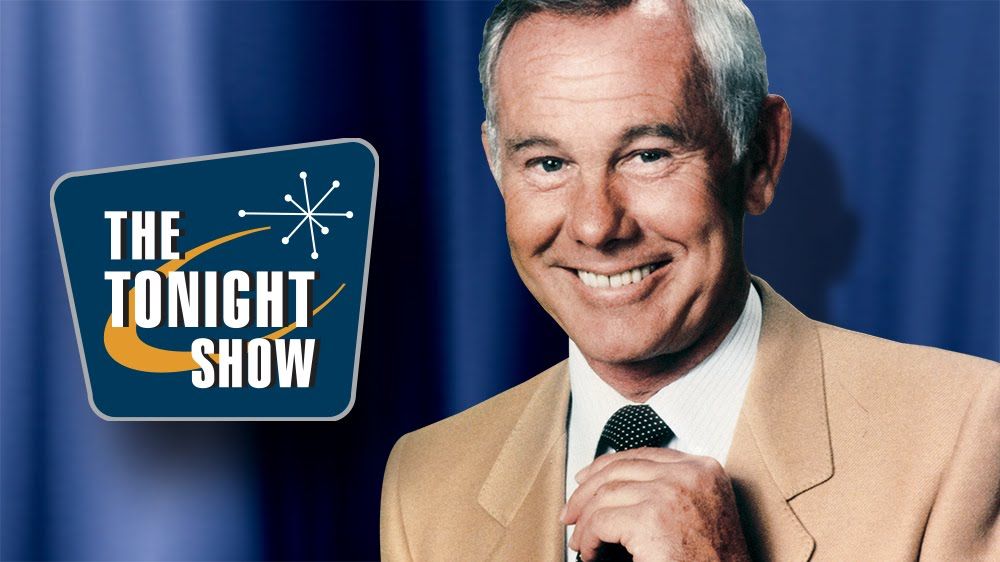
  • Johnny Carson Revealed the 9 Golden Age Guests Who Were ACTUALLY EVIL | HO!! – News

    Johnny Carson Revealed the 9 Golden Age Guests Who Were ACTUALLY EVIL | HO!!

    Heeeeeere's Johnny's legacy: The Tonight Show's golden age.

    For three decades, Johnny Carson reigned as America’s late-night king, welcoming Hollywood’s biggest stars onto his Tonight Show couch with effortless charm and a famously warm smile.

    To millions of viewers, Carson seemed like the ultimate host—gracious, witty, and always in control. But behind the scenes, the real Carson was a shrewd observer who kept a mental blacklist of guests he considered not just difficult, but genuinely evil.

    In his later years, Carson became increasingly candid about the celebrities he secretly despised. According to producers, crew members, and close friends, Carson’s private stories paint a disturbing portrait of beloved icons whose public images hid dark, sometimes monstrous, behavior.

    From legendary actresses to iconic comedians, these nine “golden age” guests left Carson convinced that not all stars shine bright when the cameras stop rolling.

    1. Joan Crawford: The Hollywood Queen With Ice in Her Veins

    When Joan Crawford appeared on The Tonight Show in 1970, viewers saw the gracious Hollywood legend they’d admired for decades. But staffers saw something else. “She was one of the coldest people I’ve ever interviewed,” Carson reportedly confided to his biographer.

    Crawford’s arrival was preceded by pages of demands—precise lighting, chair angles, studio temperature set at exactly 67 degrees. She brought her own makeup team, snubbed the show’s award-winning artists, and treated staff with calculated cruelty.

    The most shocking incident came when a young production assistant entered Crawford’s dressing room with water she’d requested. Crawford exploded, calling the assistant a “brainless little [expletive]” and demanding she be fired. The tirade was so vicious that the assistant fled in tears and security had to intervene.

    Joan Crawford - Movies, Children & Death

    Yet, when the cameras rolled, Crawford transformed into a picture of grace—every answer rehearsed, every smile calculated. Carson, unable to connect with her, later remarked, “I’ve interviewed corpses with more personality.” When Christina Crawford’s memoir Mommie Dearest exposed Joan’s alleged abuse of her children, Carson simply nodded: “I saw who she really was.”

    2. Frank Sinatra: The Charming Bully

    On screen, Frank Sinatra and Carson appeared friendly, trading jokes and stories. Off camera, Carson harbored deep disdain for Sinatra—not for his talent, but for his treatment of others.

    According to Tonight Show staff, Sinatra arrived with an intimidating entourage, creating an atmosphere “like being under surveillance.” He bullied crew members, once grabbing a floor manager by the tie for giving him a time cue, and made disparaging comments about female staff.

    Frank Sinatra (Music) - TV Tropes

    Carson, usually detached, once snapped at Sinatra for insulting a staff member: “We don’t talk about my staff that way here.” After witnessing multiple incidents, Carson instructed producers to limit Sinatra’s appearances to once a year, a rare move for a host who almost never banned guests outright. “If he didn’t sing, he’d be a mob enforcer,” Carson allegedly quipped. “And sometimes, I think he was both.”

    3. Orson Welles: The Genius Who Thought Rules Didn’t Apply

    Orson Welles was a Tonight Show spectacle—booming voice, legendary stories, and a presence that filled the room. But Carson and his staff saw a man whose ego eclipsed his talent. Welles routinely dismissed prepared questions, ignored time cues, and hijacked segments, once staying on air for 25 minutes instead of his allotted seven.

    Welles treated staff with disdain, refusing to speak directly to assistants and attempting to direct camera angles from his seat. After one appearance, Carson told Ed McMahon, “Genius doesn’t excuse everything. Being brilliant doesn’t give you the right to hijack someone else’s show.” Welles became a cautionary tale for Carson—a reminder that unchecked ego can turn even the brightest stars into nightmares backstage.

    4. Bette Davis: Hollywood’s Queen of Verbal Violence

    Bette Davis was a Tonight Show legend, but her off-air behavior was so abrasive that even Carson was taken aback. She interrupted other guests, especially younger performers or women, and physically turned her back on them. Davis demanded whiskey before appearances, and her alcohol-fueled tirades included sexist and racist language that shocked staff—even by the standards of her era.

    Carson, who rarely confronted guests, once quietly told Davis, “Miss Davis, on this show we speak to everyone with respect or we don’t speak at all.” After her final appearance, Carson declared, “Life’s too short to spend it being verbally flogged by Bette Davis, no matter how many Oscars she has.” Davis’s undeniable talent made her difficult to dismiss, but Carson ultimately chose his staff’s well-being over ratings.

    5. Mickey Rooney: The Aging Child Star With Wandering Hands

    Mickey Rooney was Hollywood royalty, but his Tonight Show appearances became notorious for inappropriate behavior, chaotic energy, and occasional intoxication. Rooney developed a reputation among female staff for unwanted touching and suggestive comments. Young production assistants would ask to be reassigned when Rooney was booked.

    Biography - The Official Licensing Website of Mickey Rooney

    Rooney’s generational gap showed in his confusion over what constituted appropriate conduct. After one appearance where Rooney made repeated comments about a young actress, Carson personally apologized to her, saying, “That’s not how professionals act on my show, and it won’t happen again.” Rooney’s appearances dwindled, and Carson insisted on daytime pre-tapings to minimize risk.

    6. Zsa Zsa Gabor: The Diva Who Drove Carson to Despair

    With her glamorous persona and distinctive accent, Zsa Zsa Gabor was a Tonight Show staple. But behind the scenes, she was one of the most demanding guests in the show’s history. Gabor’s requirements included a specific dressing room temperature, fresh orchids (no carnations), her own lighting technician, and no female guests under 40 on the same episode.

    Her diva behavior created logistical chaos—delaying tapings, keeping other guests waiting, and throwing the show’s schedule into disarray. Carson once joked, “Next time she wants to be on, tell her we’ve renamed the show The Tonight Show, starring Zsa Zsa Gabor, and I’ll be happy to be her sidekick.” Despite the headaches, Gabor’s entertainment value kept her on the guest list, but Carson’s patience wore thin.

    7. Shelley Winters: The Unpredictable Powder Keg

    Shelley Winters, a two-time Oscar winner, was infamous for her volatility. Instead of light-hearted anecdotes, she launched into intense political diatribes or deeply personal revelations that left Carson visibly uncomfortable. Winters was known for physical outbursts—once throwing a glass of whiskey at Oliver Reed on a British talk show—and Tonight Show staff would remove items from the set before her appearances.

    While Winters’s passion stemmed from genuine conviction rather than malice, her unpredictability made her a challenge for Carson. After one fiery appearance, he remarked, “I may not want to vacation with her, but at least she means every word she says.” Winters’s appearances became less frequent as Carson preferred guests who complemented the show’s format.

    8. Jane Russell: The Star Whose Politics Carson Couldn’t Stomach

    Jane Russell, Hollywood’s iconic sex symbol, quickly fell out of favor with Carson due to her extreme political views and treatment of LGBTQ+ staff. Russell reportedly refused to allow a gay makeup artist to touch her face and made derogatory comments about Rock Hudson’s sexuality. Carson, ahead of his time in not tolerating discrimination, drew a hard line after Russell made dismissive remarks about civil rights legislation during a commercial break.

    Russell was effectively blacklisted from the show—a rare move for Carson, who usually avoided banning stars with Russell’s level of fame. “He was ahead of his time in not tolerating that kind of discrimination on his show,” recalled a talent coordinator.

    9. Jerry Lewis: The Comedian Carson Called “Truly Hateful”

    Jerry Lewis was a groundbreaking entertainer and humanitarian, but Tonight Show staff described him as one of the most demeaning celebrities in Hollywood. Lewis hijacked interviews, talked over Carson, and once adjusted Carson’s tie without permission—a well-known taboo. He refused to learn staffers’ names, referring to them by their function, and launched into tirades over minor infractions.

    The contrast between Lewis’s public persona as a champion for children and his private cruelty toward staff disgusted Carson. After Lewis’s final appearance, Carson reportedly said, “Never again.” Years later, he told friends, “In a town full of phonies, he stands out as truly hateful, and that takes some doing.”

    What Carson’s Blacklist Reveals About Hollywood

    Johnny Carson’s private blacklist—Joan Crawford, Frank Sinatra, Orson Welles, Bette Davis, Mickey Rooney, Zsa Zsa Gabor, Shelley Winters, Jane Russell, and Jerry Lewis—offers a rare, unfiltered glimpse into Hollywood’s reality behind the facade of glamour. Carson wasn’t looking for enemies; he wanted every interview to go smoothly. But when he disliked someone, it was because they made it impossible not to.

    TV's uber host, Johnny Carson, proves a perilous biographical subject - Los  Angeles Times

    Carson’s unique position as gatekeeper gave him unparalleled insight into celebrity culture. His simple test: “How did they treat the pages, the assistants, the guys working the cameras?” That told him everything about a guest’s character.

    In the years since Carson’s death, many of his judgments have been validated by broader revelations. Christina Crawford’s allegations, stories of Sinatra’s mob connections, and reports of Rooney’s behavior have all been corroborated. The studio system protected these celebrities for decades, maintaining pristine public images while hiding abominable conduct.

    Today, one cell phone video could end a career. But in Carson’s era, stars could behave terribly in private, secure in the knowledge that the story would never leave the building. As we look back on Hollywood’s golden age, Carson’s unvarnished assessments remind us that our cultural icons are fallible, complicated, and sometimes truly disturbing behind their public personas.

    As Carson’s longtime producer put it, “The camera doesn’t just add 10 lbs. It adds a layer of fiction.” Carson’s greatest skill wasn’t just interviewing people—it was seeing through that fiction to the truth underneath.

    News

    Stefon Diggs’ Ex LEAKS T@pe Of His G@y Thr22some W/ Cardi B| Cardi Is Desperate | HO’

    Stefon Diggs’ Ex LEAKS T@pe Of His G@y Thr22some W/ Cardi B| Cardi Is Desperate | HO’ September 2025 –…

    Offset RAGES & Reveals He’s The REAL Father Of Cardi’s Baby| EXPOSES Her Plans To Trap Stefon | HO’

    Offset RAGES & Reveals He’s The REAL Father Of Cardi’s Baby| EXPOSES Her Plans To Trap Stefon | HO’ September…

    ‘We’re Leaving!’ Marvel COLLAPSES After Avengers Cast REFUSES Ironheart 2’s Release | HO~

    ‘We’re Leaving!’ Marvel COLLAPSES After Avengers Cast REFUSES Ironheart 2’s Release | HO~ In a move that has sent shockwaves…

    🔥 INTERNET EXPLOSION: Elon Musk Issues a 3-Word Response to Jimmy Kimmel After the Host Mocked Him Over Nazi Salutes and Tesla Drama | HO~

    🔥 INTERNET EXPLOSION: Elon Musk Issues a 3-Word Response to Jimmy Kimmel After the Host Mocked Him Over Nazi Salutes…

    BREAKING: Jimmy Kimmel Announces END of Jimmy Kimmel Live and Says Goodbye to America – ‘I’m Moving to Canada and NEVER Coming Back!’ | HO~

    BREAKING: Jimmy Kimmel Announces END of Jimmy Kimmel Live and Says Goodbye to America – ‘I’m Moving to Canada and…

    “ABC Is DEAD!” ABC PANICS After NBC Signs ABC Stars | HO~

    “ABC Is DEAD!” ABC PANICS After NBC Signs ABC Stars | HO~ In a stunning series of events that has…


    End of content

    No more pages to load

    Next page

  • ‘The Truth Comes Out!’ — Katie Price’s Boyfriend JJ Slater Drops Honest Bombshell About His MAFS – News

    EXCLUSIVE: Katie Price is in a relationship with 31-year-old boyfriend JJ Slater, who rose to fame on Married at First Sight UK in 2023


    Katie Price and JJ Slater

    Katie Price and JJ Slater confirmed their relationship in February 2024 (Image: Getty)

    Katie Price’s boyfriend has given an honest admission about his previous relationship on Married at First Sight UK. The TV star is currently in a relationship with JJ Slater, who found fame on the E4 reality show in 2023. JJ has spoken to Express Online on behalf of Casino.org. about his experience on the dating programme, why he applied, and how he has dealt with online trolls. The Essex lad, whose real name is John Joe Slater, was married to Bianca Petronzi on the show. But, he caused controversy when he split with partner Bianca in order to explore his connection with a different contestant, Ella Morgan. Speaking about when he first met Biana at the altar, he said: “Yeah, I mean, obviously not everyone can be everyone’s type.

    “For me, that initial attraction just wasn’t there. I’ve got nothing bad to say about that person at all, but from my side, there just wasn’t any chemistry, not romantically and, honestly, not even on a friendship level. There’s no bad blood whatsoever, but I just didn’t feel that connection. I wanted to give it a go and try to build a friendship first, but yeah… it was difficult.”

    JJ Slater at the White Fox Heatwave Event

    JJ Slater has opened up about his relationship on MAFS UK (Image: Getty)

    When quizzed about what his friends and family thought about him signing up for the show, JJ said: “They were a bit surprised that it was something that I was doing.

    “Because MAFS is so big, it naturally creates a lot of opinions. And obviously, my journey wasn’t straightforward or plain sailing, so I probably attracted more opinions and more criticism than a lot of the others. And that’s fair enough, you know, because my journey was quite different. But there was definitely a lot of hate and trolling.”

    He continued: “Now, though, it’s been two years, and there are probably more opinions about me in the papers now – not every day, but close – and honestly, I don’t even bat an eyelid anymore.

    JJ and Katie Price at the KISS Haunted House Party

    JJ Slater and Katie Price met towards the end of 2023 (Image: Getty)

    Get the breaking showbiz news first, sent straight to your phone Join us on WhatsApp

    Our community members are treated to special offers, promotions, and adverts from us and our partners. You can check out at any time. Read our Privacy Policy

    “At first, it was really hurtful and overwhelming, but now it’s like a switch has flipped. I just let it go over my head because, at the end of the day, these people don’t actually know me.” 

    Katie Price and JJ first met in late 2023, and their relationship became public in February 2024. In May 2024, Katie labelled JJ as “the most kind, genuine, easygoing, chilled person” on a podcast.

    Invalid email

    We use your sign-up to provide content in ways you’ve consented to and to improve our understanding of you. This may include adverts from us and 3rd parties based on our understanding. You can unsubscribe at any time. Read our Privacy Policy